- Disability Awareness
What Is Disability Awareness Training? Benefits, Legal Duties and Best Practice

What Is Disability Awareness Training?
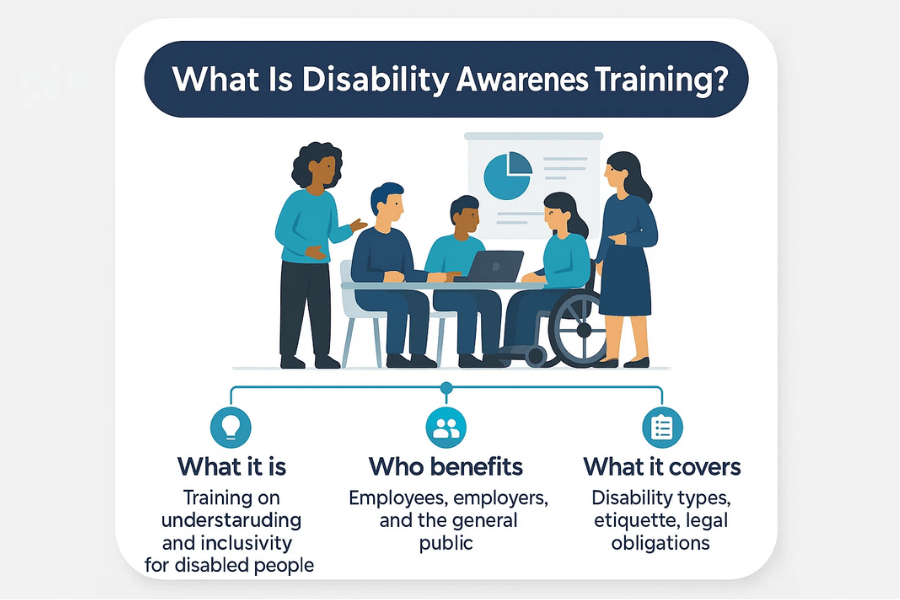
Disability awareness training is designed to help individuals and organisations better understand the experiences, needs, and rights of disabled people. It equips staff with the knowledge and confidence to communicate respectfully, remove barriers, and create inclusive environments where everyone can participate fully.
In the workplace, this type of training supports legal compliance, improves staff morale, and fosters a culture where disabled employees, customers, and service users feel valued and supported. It typically covers a blend of practical guidance, legal responsibilities, disability etiquette, and real-world scenarios.
Aims and Core Principles
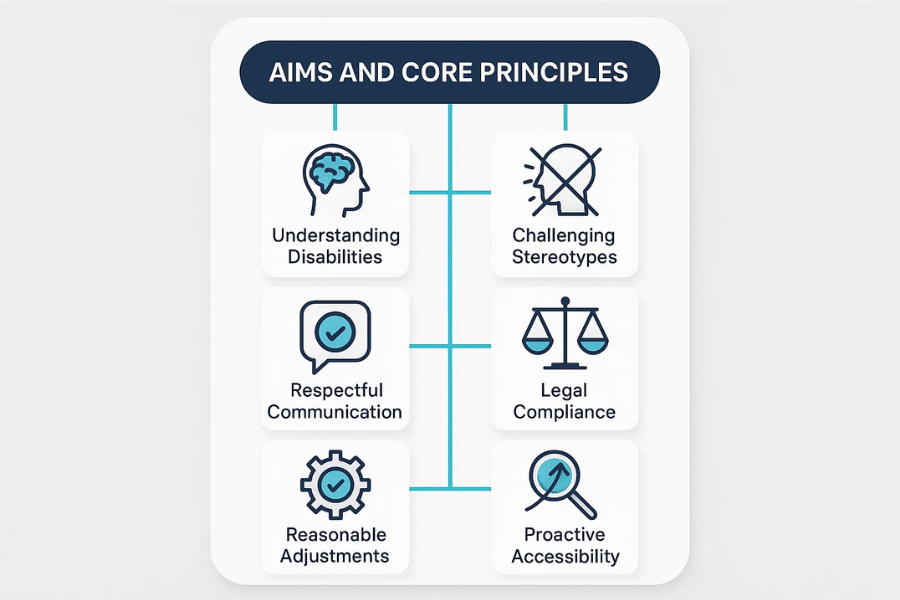
Disability awareness training focuses on increasing understanding, reducing stigma, and building practical skills that make inclusion a natural part of everyday interactions. The training aims to shift attitudes, encourage empathy, and highlight how small changes can create significant improvements in accessibility.
Key aims and principles include:
- Promoting understanding of both visible and invisible disabilities
- Challenging stereotypes, stigma, and outdated assumptions
- Encouraging respectful, person-centred communication
- Supporting organisations to comply with the Equality Act 2010
- Highlighting the importance of reasonable adjustments
- Encouraging a proactive approach to accessibility rather than a reactive one
These principles help ensure that participants leave the training with greater confidence, awareness, and motivation to contribute to a more inclusive workplace. By focusing on practical, real-life scenarios, the training remains relevant and directly applicable to daily interactions.
Why It Matters in Today’s Workplace
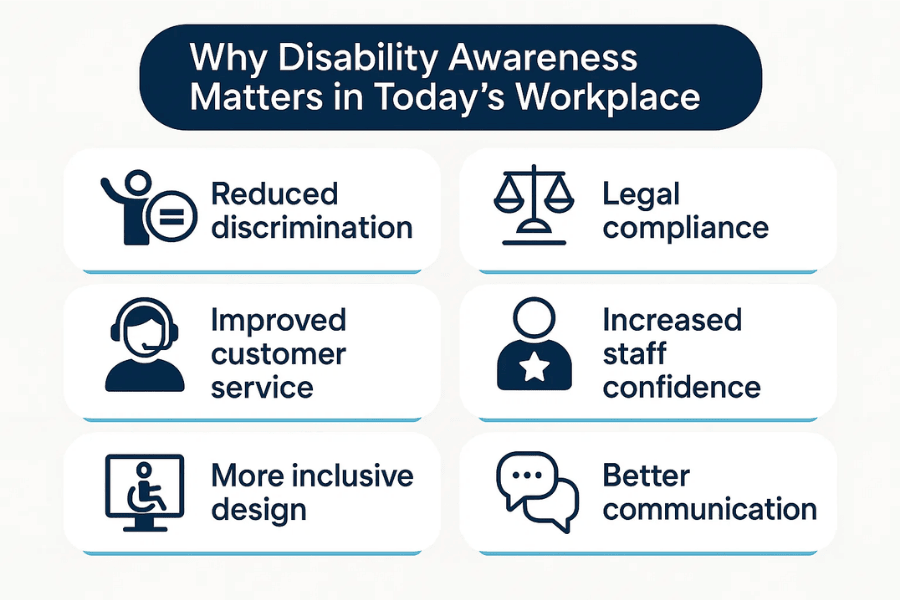
Modern workplaces are expected to be diverse, inclusive, and accessible. Disability awareness training plays a crucial role in helping organisations build environments where every individual can thrive, regardless of their disability.
Beyond legal compliance, it supports positive organisational culture and strengthens relationships with customers, clients, and colleagues.
This training matters because it:
- Reduces the risk of accidental discrimination
- Ensures compliance with the Equality Act 2010
- Improves customer service and accessibility
- Builds confidence when interacting with disabled clients or colleagues
- Encourages inclusive decision-making and accessible design
- Helps break down communication barriers and increase collaboration
With a growing focus on equality, diversity, and inclusion (EDI), disability awareness training is quickly becoming essential rather than optional. Workplaces that invest in training often see better staff engagement, improved reputation, and greater productivity through a more supportive culture.
Who Should Receive This Training?
Disability awareness training is valuable across all industries and sectors, benefiting anyone who interacts with colleagues, customers, or service users. While it is especially important for public-facing roles, leadership teams and internal departments also play a key part in creating inclusive workplaces.
Those who particularly benefit from the training include:
- Managers and supervisors responsible for staff wellbeing
- HR teams overseeing recruitment and workplace adjustments
- Customer-facing employees
- Education, healthcare, and social care professionals
- Front-of-house, reception, and administrative staff
- Senior leaders shaping organisational culture
- Anyone responsible for designing physical spaces, websites, or services
However, disability inclusion should be everyone’s responsibility. Offering this training organisation-wide encourages shared awareness, reduces misunderstandings, and ensures consistent, respectful interactions throughout the business.
The Importance of Disability Awareness in the UK
Disability awareness is essential for creating fair, accessible, and inclusive environments across the UK. With around 16 million disabled people in the UK, understanding their needs is not only a moral responsibility but also a practical necessity for any organisation. Increasing awareness helps reduce discrimination, improves access to services, and ensures everyone can participate fully in society.
For businesses, this awareness contributes to stronger customer relationships, a more diverse workforce, and a positive public reputation. It also aligns with the UK’s legal and cultural expectations around equality, making it a key component of modern workplace practice.
Legal Responsibilities Under the Equality Act 2010
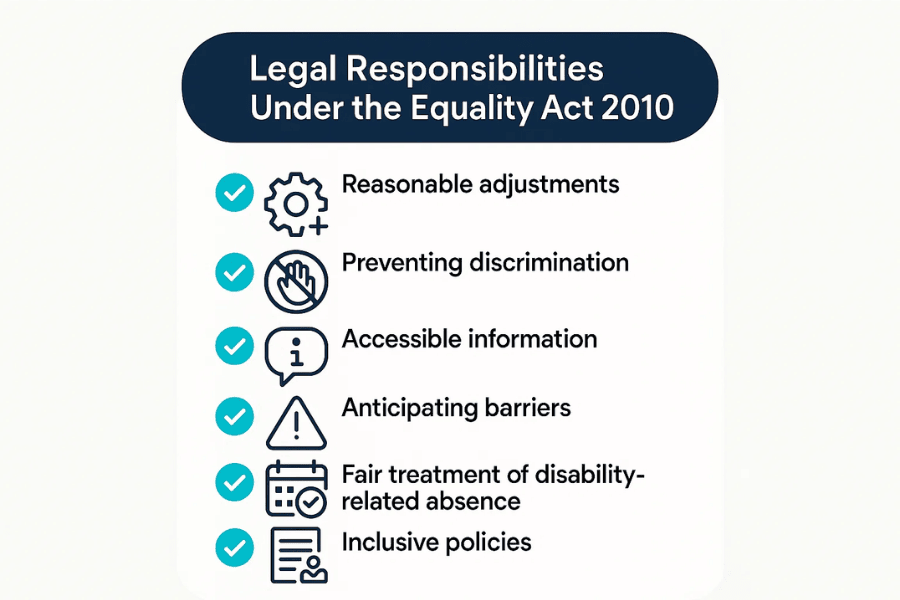
The Equality Act 2010 protects disabled people from discrimination and outlines the duties organisations have to ensure equal access. Disability awareness training helps staff understand these responsibilities, reducing the risk of unlawful treatment and ensuring compliance.
Core legal responsibilities include:
- Making reasonable adjustments for disabled employees and customers
- Preventing discrimination, harassment, and victimisation
- Ensuring policies and procedures do not disadvantage disabled people
- Providing accessible information, services, and environments
- Anticipating barriers rather than waiting for issues to arise
- Treating disability-related absences and performance issues fairly
By understanding these duties, organisations can avoid costly legal claims while fostering a respectful and supportive culture. Training ensures employees know how to apply the law in practical situations, from recruitment to customer service.
The Business Case for Inclusivity
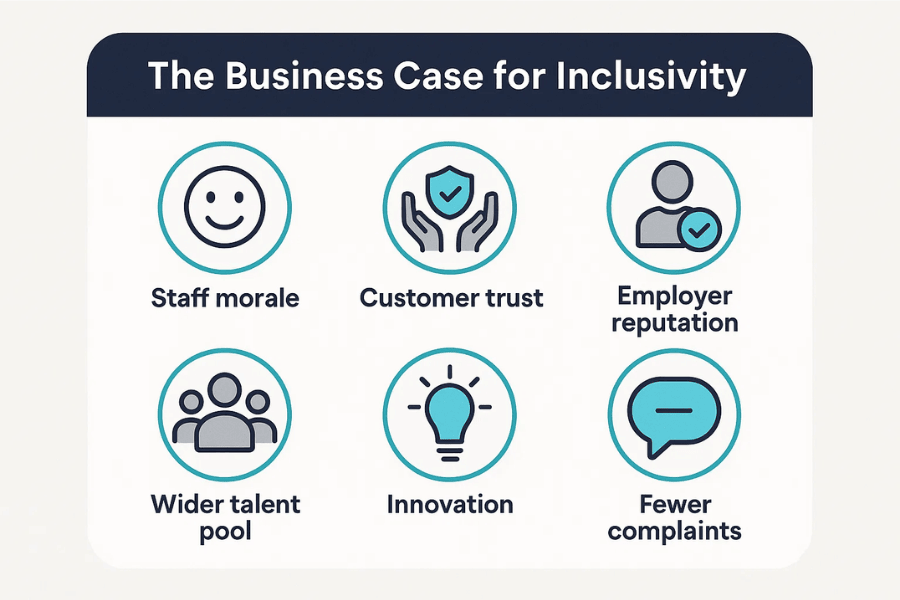
Inclusivity is not only the right thing to do—it also brings measurable benefits to organisations. When staff understand disability, organisations are better equipped to attract talent, improve customer satisfaction, and build strong community relationships.
Inclusive workplaces benefit from:
- Higher staff morale and reduced turnover
- Increased customer trust and loyalty
- Stronger employer branding and public reputation
- Access to a wider talent pool
- Improved innovation through diverse perspectives
- Reduced risk of discrimination-related complaints or incidents
A commitment to inclusion boosts both organisational culture and commercial performance. Disability awareness training helps embed inclusivity into everyday practice, creating long-term value for both staff and customers.
Common Misconceptions About Disability
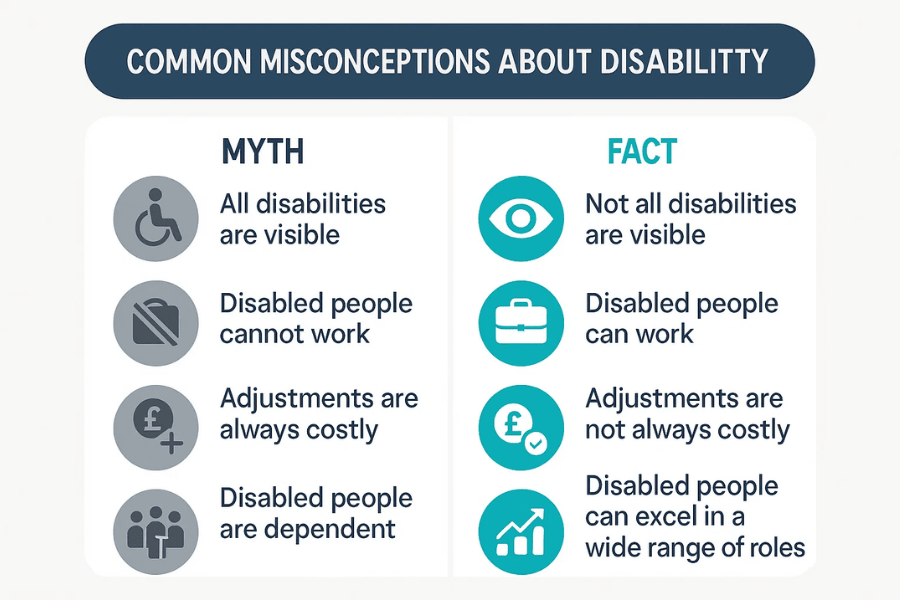
Many people still hold outdated or inaccurate assumptions about disability, often unintentionally. These misconceptions can lead to awkward interactions, reduced opportunities, and inaccessible environments.
Disability awareness training helps address these misunderstandings by providing accurate information and promoting open, respectful dialogue.
Common misconceptions include:
- That all disabilities are visible or obvious
- That disabled people require constant assistance
- That disability automatically limits capability or ambition
- That adjustments are expensive or disruptive
- That “treating everyone the same” is always fair
- That disabled people can’t work in certain roles
Challenging these assumptions helps create workplaces where disabled people feel welcome, understood, and supported. With the right awareness and adjustments, most barriers can be removed, allowing individuals to perform at their best.
Key Components of Effective Disability Awareness Training –
Effective disability awareness training combines practical knowledge, real-life examples, and clear guidance to help participants understand how to create accessible and respectful environments. A strong programme goes beyond general information and equips staff with the tools they need to support disabled colleagues, customers, and service users confidently.
This type of training typically covers communication skills, legal responsibilities, inclusive behaviour, and the importance of removing physical and attitudinal barriers. By addressing both visible and invisible disabilities, training ensures a well-rounded understanding of how disability affects individuals differently.
Understanding Visible and Invisible Disabilities
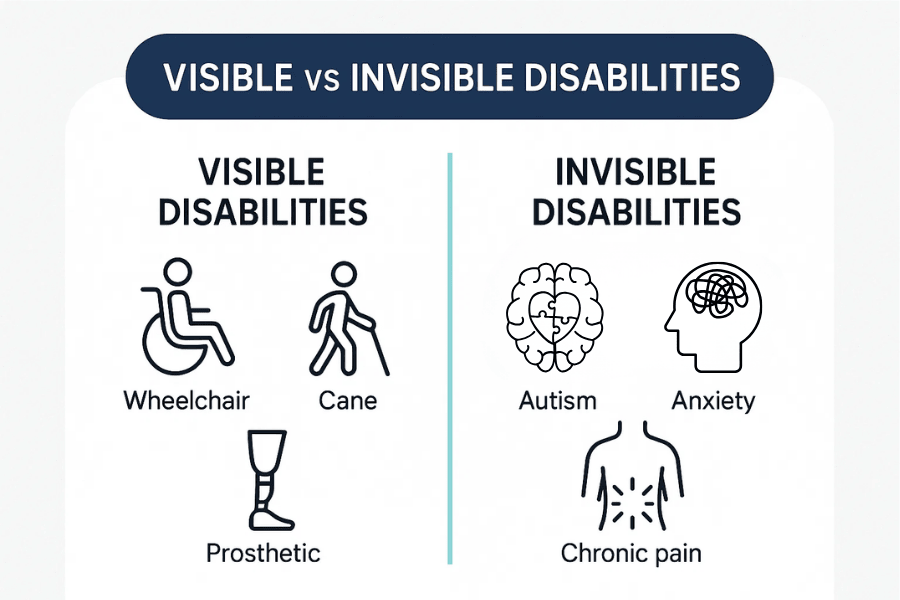
One of the most important components of disability awareness training is helping participants recognise that disabilities can be both seen and unseen. While mobility impairments or sensory disabilities may be more noticeable, many conditions – such as chronic pain, autism, mental health conditions, or learning differences – are not immediately visible.
Understanding this distinction encourages greater empathy, reduces judgement, and prevents assumptions about a person’s abilities or needs.
Key areas covered typically include:
- The difference between visible and invisible disabilities
- Examples of less obvious disabilities (e.g., dyslexia, anxiety, chronic fatigue)
- How to avoid making assumptions
- How to offer help respectfully
- The impact of symptoms that fluctuate day to day
- The importance of privacy and confidentiality
By appreciating how varied disabilities can be, staff are better equipped to respond sensitively and avoid unintentional discrimination. This knowledge also helps remove barriers and build trust with colleagues and customers.
Inclusive Language and Communication Skills
Inclusive communication is central to effective disability awareness. Training helps participants develop respectful, person-centred language and learn how to adapt communication methods to suit individual needs.
This includes everything from choosing inclusive terminology to adjusting tone, pace, or format when speaking or writing.
Typical communication skills taught include:
- Using person-first or identity-first language appropriately
- Avoiding outdated or offensive terms
- Communicating clearly and respectfully
- Asking before offering help
- Adapting communication for sensory, cognitive, or speech-related needs
- Ensuring information is available in accessible formats
Improving communication skills helps prevent misunderstandings and ensures disabled people feel recognised and respected. It also leads to more positive workplace interactions and better customer service experiences.
Challenging Stereotypes and Unconscious Bias
Many biases exist at a subconscious level, shaped by societal messaging and past experiences. Disability awareness training enables participants to identify and challenge these unintentional biases before they influence decisions or behaviour.
Addressing these issues creates a fairer and more inclusive environment for everyone.
Training often explores:
- What unconscious bias is and how it develops
- Common disability stereotypes
- How bias influences recruitment, performance management, and daily interactions
- Ways to identify personal blind spots
- Strategies for reducing bias in decision-making
- The importance of reflective practice
By acknowledging and addressing biases, organisations can make more equitable decisions and create a workplace culture grounded in respect and fairness.
Practical Adjustments and Workplace Accessibility
Another vital component of disability awareness training involves learning how to implement practical adjustments. These adjustments help remove barriers and allow disabled people to access employment, services, and facilities on an equal basis.
Training provides real-world examples and encourages proactive thinking to ensure accessibility becomes part of organisation-wide planning.
Common topics covered include:
- Understanding what “reasonable adjustments” mean in practice
- Examples of effective adjustments (e.g., flexible hours, adapted equipment)
- Improving physical accessibility
- Ensuring digital and online accessibility
- Designing inclusive services and processes
- Anticipating needs instead of waiting for issues to arise
When employees understand how to make and support reasonable adjustments, organisations become more welcoming, productive, and legally compliant. Proactive accessibility benefits everyone—not just disabled people.
Types of Disability Awareness Training –
Disability awareness training can be delivered in several formats, each offering different benefits depending on an organisation’s needs, size, and learning preferences. Some businesses prefer in-person sessions for practical discussions, while others choose digital learning for flexibility and accessibility.
The most effective approach often involves a blend of methods, ensuring staff can learn at their own pace while still gaining practical, hands-on understanding. Selecting the right training format helps ensure that learning is accessible, engaging, and suitable for all employees.
Face-to-Face Workshops
Face-to-face workshops allow participants to interact directly with trainers, ask questions, and engage in meaningful group discussions. This format is especially effective for exploring sensitive topics, challenging assumptions, and developing confidence when communicating with disabled people.
Workshops may include case studies, group tasks, and interactive exercises to help staff apply their learning in a safe, supportive environment.
Benefits of face-to-face training include:
- Real-time discussion and feedback
- Structured group activities that enhance learning
- Opportunities to ask questions and clarify misunderstandings
- Personal stories shared by trainers or guest speakers
- Hands-on demonstrations of adjustments or equipment
- Increased engagement through in-person facilitation
Because these sessions encourage open dialogue, they can be particularly impactful for teams who work closely with customers or service users.
Online Courses and E-Learning Modules
Online disability awareness training offers flexibility and convenience, making it ideal for organisations with remote staff or shift workers. E-learning modules allow participants to learn at their own pace, revisit content, and complete training at a time that suits them.
This format can be highly accessible when designed correctly, supporting screen readers, captioning, and adjustable font sizes.
Advantages of online training include:
- Flexible, self-paced learning
- Cost-effective for larger organisations
- Easy to track progress and completion
- Accessible formats for diverse learners
- Consistent training across multiple locations
- Ability to update content quickly as best practice evolves
Well-designed digital learning can be just as effective as in-person sessions, especially when it includes interactive elements such as quizzes, videos, and real-life scenarios.
Scenario-Based and Experiential Learning
Scenario-based learning involves practical, real-world examples that show participants how to handle situations involving disability sensitively and inclusively. This method encourages critical thinking and helps staff practise decision-making in a safe environment.
Experiential learning may include role play, simulations, or reflective exercises to deepen understanding and promote empathy.
Common elements of scenario-based training include:
- Real-life case studies
- Simulated workplace challenges
- Opportunities to practise communication and problem-solving
- Situational judgement exercises
- Facilitated discussions to analyse choices
- Reflection on personal attitudes and behaviours
This type of training helps bridge the gap between theory and practice, giving staff the tools they need to respond confidently and appropriately in everyday situations.
How Disability Awareness Training Benefits Organisations
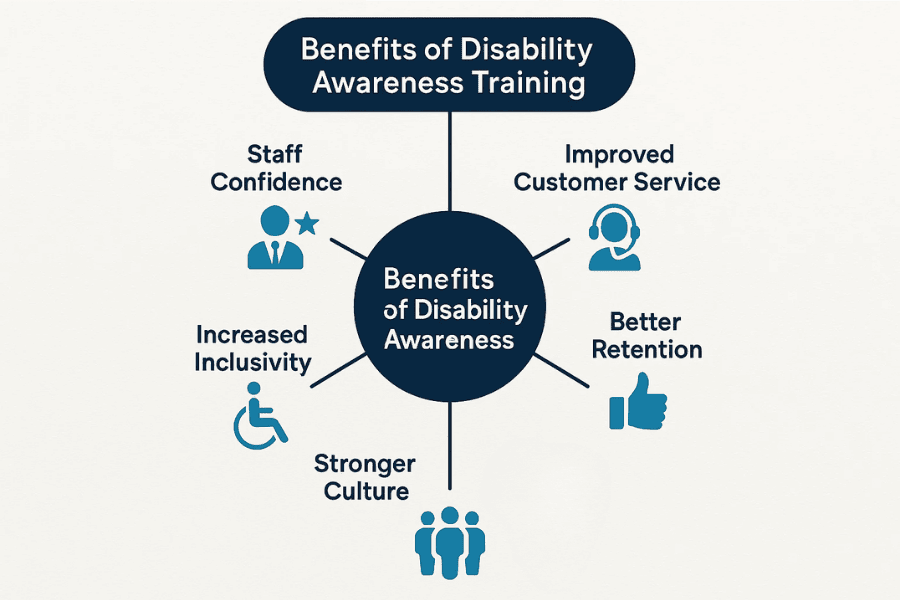
Disability awareness training brings a wide range of benefits to organisations across all sectors. By increasing staff knowledge and confidence, it helps create a more inclusive and productive workplace culture. It also improves communication, reduces the risk of discrimination, and supports organisations in meeting their legal obligations.
In addition to ethical and legal considerations, investing in disability awareness enhances reputation, strengthens customer relationships, and supports long-term business growth. When employees understand how to work inclusively, the entire organisation becomes more accessible, welcoming, and effective.
Improved Staff Confidence and Empathy
Awareness training helps employees feel more confident when interacting with disabled people, whether they are colleagues, customers, or service users. Increased confidence often leads to more positive and respectful interactions, reducing misunderstandings or awkwardness.
Empathy plays a crucial role in building supportive workplace relationships, and training helps staff understand the challenges disabled people may face.
Key outcomes include:
- Greater awareness of individual needs
- More comfortable and respectful communication
- Increased willingness to offer appropriate support
- Reduced anxiety around “saying the wrong thing”
- Stronger working relationships within teams
- A more compassionate organisational culture
By developing these interpersonal skills, organisations foster work environments where everyone feels valued and understood.
Better Customer Service Experiences
For customer-facing teams, disability awareness training is essential for ensuring that every customer feels welcomed and supported. Understanding different disabilities and how to make reasonable adjustments allows staff to deliver high-quality service that meets individual needs.
Improved customer service often leads to higher satisfaction levels, increased loyalty, and a more inclusive reputation.
Customer service benefits include:
- More accessible communication methods
- Faster and more appropriate responses to customer needs
- Reduced risk of complaints or negative experiences
- Increased trust among disabled customers and their families
- Enhanced public reputation as an inclusive organisation
- Compliance with accessibility requirements
Providing accessible customer experiences strengthens both brand image and long-term customer loyalty.
Enhanced Recruitment and Retention
An organisation that prioritises disability inclusion is more likely to attract a diverse range of applicants. When disabled people feel safe, supported, and valued in the workplace, they are more likely to apply for roles and remain with the business long term.
Training supports fair recruitment practices and helps retain staff by promoting a positive working environment.
Recruitment and retention benefits include:
- Fairer and more accessible hiring processes
- A wider talent pool, including skilled disabled candidates
- Reduced turnover due to improved workplace support
- A stronger employer brand
- Better understanding of reasonable adjustments during recruitment
- Increased staff loyalty and engagement
Inclusive recruitment practices are not only ethical—they also give organisations access to a broader, highly capable workforce.
Reduced Risk of Discrimination Claims
When staff understand their responsibilities under the Equality Act 2010, the likelihood of discriminatory behaviour or decisions decreases significantly. Disability awareness training ensures that employees understand the law and know how to apply it practically in the workplace.
This reduces legal risks and helps organisations avoid costly claims or reputational damage.
Key protective factors include:
- Clear understanding of legal obligations
- More consistent decision-making
- Fewer incidents related to misunderstanding or bias
- Correct handling of reasonable adjustment requests
- Improved documentation and processes
- Stronger organisational compliance
By reducing the risk of discrimination, training contributes to a safer and more legally compliant working environment.
How to Implement Disability Awareness Training in Your Organisation –
Implementing disability awareness training effectively requires planning, commitment, and a clear understanding of your organisation’s needs. The aim is to create a long-term, sustainable approach to inclusion—not just a single training session.
By assessing knowledge gaps, selecting the right training provider, and embedding learning into everyday practice, organisations can ensure that disability awareness becomes an integral part of workplace culture.
Assessing Current Knowledge Gaps
Before introducing training, it is important to understand where the organisation currently stands. Assessing existing knowledge, attitudes, and skills helps identify key areas to focus on and ensures the training is relevant to the workforce.
This step also allows organisations to benchmark progress and measure improvements over time.
Methods for assessing knowledge gaps include:
- Staff surveys or questionnaires
- Anonymous feedback forms
- Interviews or focus groups
- Reviewing past complaints or incidents
- Analysing recruitment, retention, or absence data
- Consulting HR, managers, or staff networks
A thorough assessment ensures training is tailored, practical, and aligned with the real needs of the organisation.
Choosing the Right Training Provider
Selecting the right training provider is essential for delivering high-quality and impactful disability awareness training. Providers should have strong expertise, up-to-date knowledge of UK legislation, and experience working with diverse organisations.
It is also important to choose a provider who offers accessible materials and demonstrates a genuine understanding of disability inclusion.
Key factors to consider when choosing a provider include:
- Experience and qualifications of trainers
- Knowledge of the Equality Act 2010 and best practice
- Ability to tailor training to your sector or team
- Use of real-life examples and case studies
- Accessibility features of training materials
- Options for online, in-person, or blended delivery
A trusted provider will ensure that the training is engaging, accurate, and relevant—ultimately supporting long-term organisational change.
Embedding Learning Into Everyday Practice
Disability awareness should not be a one-off activity. To make a lasting difference, organisations need to embed inclusive behaviour into daily operations, policies, and decision-making.
This requires consistent reinforcement, clear leadership, and practical opportunities for staff to apply what they have learnt.
Ways to embed learning include:
- Encouraging managers to model inclusive behaviour
- Regular refresher training or follow-up sessions
- Updating policies and procedures to reflect best practice
- Creating staff networks or inclusion champions
- Incorporating accessibility into project planning
- Sharing success stories and positive outcomes
Embedding learning helps create a culture where inclusion becomes second nature, not an exception.
Measuring Impact and Continuous Improvement
To ensure disability awareness training remains effective, organisations must measure its impact and continually refine their approach. This helps maintain momentum and ensures learning remains relevant as needs evolve.
Monitoring progress also demonstrates commitment to inclusion and provides valuable insights into areas that may require further development.
Ways to measure effectiveness include:
- Post-training evaluations and feedback
- Monitoring staff confidence and behaviour over time
- Reviewing accessibility improvements
- Tracking recruitment and retention data
- Reviewing customer or service user feedback
- Regularly updating training content
Continuous improvement ensures that disability awareness remains a priority and keeps the organisation aligned with current legislation and best practice.
Best Practice Tips for Creating an Inclusive Workplace
Creating an inclusive workplace involves more than meeting legal requirements—it requires a proactive approach to removing barriers, fostering respect, and ensuring everyone feels valued. When organisations prioritise inclusion, they improve employee morale, strengthen teamwork, and enhance overall performance.
By implementing practical strategies and encouraging open communication, organisations can create a culture where disabled staff and customers feel supported, empowered, and able to contribute fully.
Adjustments That Make a Big Difference
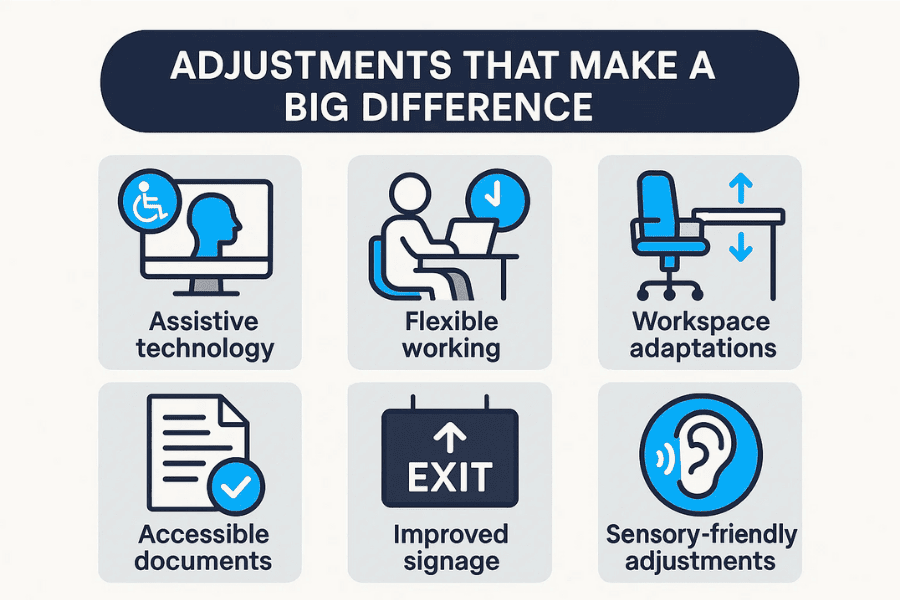
Reasonable adjustments are often simple, low-cost changes that help remove barriers and enable disabled people to work or access services effectively. These adjustments can be physical, technological, or procedural, and they should be tailored to individual needs.
Making adjustments proactively—not only when requested—demonstrates a genuine commitment to accessibility and inclusion.
Examples of impactful adjustments include:
- Providing assistive technology or adapted equipment
- Offering flexible working hours or remote-working options
- Adjusting lighting, seating, or workspace layout
- Allowing additional time for tasks or assessments
- Making documents available in accessible formats
- Improving signage, ramps, or accessible toilets
When organisations make these changes part of their standard practice, disabled employees and customers feel more welcome and supported.
Encouraging Open Dialogue
Open communication is essential for building trust and understanding. Many disabled people may be hesitant to disclose their needs due to past experiences, stigma, or fear of being treated differently.
Creating a safe space for conversations helps ensure that individuals feel comfortable discussing any adjustments or support they might require. Leaders and managers play a crucial role in fostering this culture of openness.
Ways to promote open dialogue include:
- Encouraging honest conversations during one-to-ones
- Training managers in sensitive communication
- Ensuring confidentiality and respect at all times
- Providing clear channels for feedback or disclosure
- Using inclusive language in policies and meetings
- Celebrating diversity and lived experiences
When people feel heard and respected, they are more likely to share their needs, which leads to better outcomes for both individuals and the organisation.
Fostering a Culture of Respect
Respect is the foundation of any inclusive workplace. This involves recognising individual differences, challenging negative attitudes, and ensuring everyone feels valued for their contributions.
An organisation that actively promotes respect will naturally see improved teamwork, better communication, and a stronger sense of belonging among employees.
Core elements of a respectful workplace include:
- Zero tolerance for discrimination or harassment
- Fair and transparent decision-making
- Inclusive leadership that models positive behaviour
- Recognition of diverse strengths and perspectives
- Encouraging collaboration and mutual support
- Providing ongoing training to reinforce inclusive values
By embedding respect into everyday practices, organisations create a positive environment where all employees can thrive.
Common Challenges and How to Overcome Them
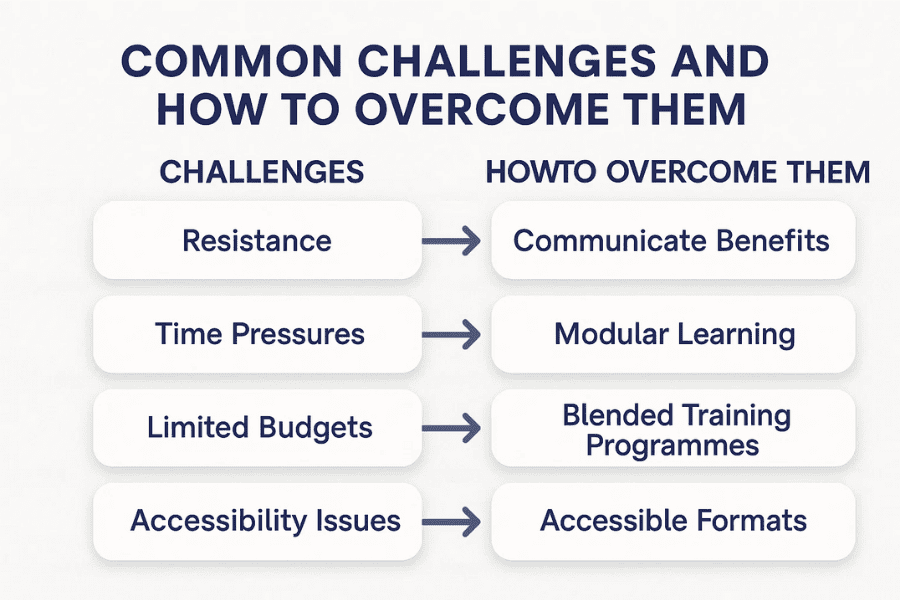
While disability awareness training brings significant benefits, organisations may encounter challenges when implementing it. These challenges often stem from limited resources, lack of confidence, or misconceptions about disability.
Understanding these barriers helps organisations plan effectively and ensure training has a meaningful, long-lasting impact. By addressing challenges proactively, businesses can build stronger, more inclusive cultures where disabled people feel welcomed and supported.
Resistance or Lack of Engagement
Some employees may initially feel unsure about the purpose of disability awareness training, especially if they believe the topic does not apply to their role. Others may fear saying the wrong thing or be uncomfortable discussing disability.
To maximise engagement, organisations should communicate the importance of training clearly and create a supportive, non-judgemental environment.
Ways to overcome resistance include:
- Explaining the personal and organisational benefits of the training
- Sharing real-life stories to make the content relatable
- Encouraging questions and open discussion
- Ensuring training is delivered in an engaging, interactive format
- Highlighting leadership support and commitment
- Reassuring staff that mistakes are part of the learning process
When employees understand the purpose and value of the training, they are more likely to participate fully and apply what they learn.
Time and Budget Constraints
Many organisations struggle to prioritise training due to time pressures or limited budgets. However, disability awareness training does not have to be expensive or time-consuming to be effective.
By exploring flexible learning options, businesses can provide high-quality training without disrupting operations.
Solutions to manage constraints include:
- Offering short, modular online courses
- Scheduling sessions during quieter periods
- Integrating training into existing development programmes
- Using blended learning (a mix of online and face-to-face)
- Starting with core topics and expanding over time
- Seeking cost-effective providers or group sessions
A gradual, consistent approach can be just as effective as a full-day workshop, especially if learning is reinforced regularly.
Ensuring Accessibility of the Training Itself
It is essential that disability awareness training is accessible to the very people it is designed to support. Inaccessible training undermines inclusion and may create additional barriers for disabled employees.
Ensuring that all materials and sessions meet accessibility standards helps everyone benefit fully from the learning experience.
Accessibility considerations include:
- Providing captions, transcripts, and audio descriptions
- Ensuring compatibility with screen readers
- Offering flexible formats (online, in-person, hybrid)
- Allowing breaks and pacing content appropriately
- Providing materials in alternative formats (large print, Easy Read)
- Ensuring training venues are physically accessible
By prioritising accessibility, organisations demonstrate a genuine commitment to inclusion and ensure that no one is excluded from the learning process.
Frequently Asked Questions About Disability Awareness Training
Disability awareness training often raises important questions from organisations and individuals who want to ensure they meet best practice standards. These questions commonly relate to the frequency of training, legal requirements, and what makes a training programme effective.
Providing clear answers helps organisations plan their approach and ensures that staff feel informed and confident about their responsibilities.
How Often Should Staff Complete the Training?
The recommended frequency for disability awareness training depends on the organisation’s needs, industry, and the rate at which policies or legislation evolve. However, regular refreshers are essential to keep knowledge up to date and reinforce good practice.
Refresher sessions also help reinforce behavioural change, ensuring training has a long-term impact rather than being seen as a one-off exercise.
Typical recommendations include:
- Completing core training every 1–2 years
- Providing annual refreshers or shorter updates
- Introducing training for all new starters during onboarding
- Offering additional training when legislation changes
- Refreshing team knowledge after incidents or feedback
- Updating content regularly to reflect best practice
By maintaining a consistent training cycle, organisations help ensure ongoing compliance and continuous improvement.
Is Disability Awareness Training Mandatory?
While disability awareness training is not always legally mandatory for all organisations, elements of it support compliance with the Equality Act 2010. Employers must ensure their staff do not discriminate against disabled people, and training is a key way to meet this responsibility.
Many sectors—such as education, healthcare, hospitality, and public services—strongly recommend or require this training due to frequent contact with disabled individuals.
Key points to consider include:
- Training is essential for meeting legal duties under the Equality Act
- Some sectors or contracts may explicitly require it
- Public-facing roles especially benefit from compulsory training
- Organisations with inclusion strategies often mandate it internally
- Regular training reduces legal and reputational risks
- Making training mandatory ensures consistent practice across teams
While not legally required in every setting, disability awareness training is widely considered best practice and an important part of responsible organisational behaviour.
What Makes Training Effective?
Effective disability awareness training is practical, engaging, and tailored to the specific needs of an organisation. It should go beyond basic theory and help staff apply inclusive behaviours in real-life situations.
Training should also be delivered in accessible formats and kept up to date with current legislation, language, and best practice.
Characteristics of effective training include:
- Use of real-life scenarios and case studies
- Interactive elements such as group discussions or quizzes
- Trainers with lived experience or specialist expertise
- Clear explanations of legal responsibilities
- Practical examples of reasonable adjustments
- Accessible materials and flexible delivery formats
When training is relevant, relatable, and well-delivered, it can lead to meaningful behavioural change and long-term improvements in organisational culture.
Conclusion: The Value of Building a More Inclusive Future
Disability awareness training is a crucial step towards creating workplaces and communities where everyone can thrive. By increasing understanding, building confidence, and challenging misconceptions, organisations can break down barriers and foster a culture of genuine inclusion. This not only benefits disabled people but also strengthens the entire organisation.
A commitment to disability awareness reflects modern values of fairness, accessibility, and respect. It also supports long-term organisational growth by improving staff morale, customer satisfaction, and legal compliance.
Why Investing in Awareness Matters
Investing in disability awareness sends a powerful message: that the organisation values diversity and is committed to treating all individuals with dignity. This investment goes far beyond training sessions—it shapes attitudes, behaviours, and everyday interactions.
When organisations prioritise inclusion, they create safer, more supportive environments where people are empowered to reach their full potential.
Key reasons why investment matters include:
- It strengthens organisational culture and morale
- It improves accessibility for staff, customers, and partners
- It supports compliance with UK legislation
- It reduces risk and increases organisational resilience
- It enhances reputation and trust in the community
- It encourages long-term positive behavioural change
Ultimately, investing in disability awareness is an investment in people—and in a more equal and inclusive society.
Taking the Next Step
The next step for any organisation is to turn awareness into action. Whether you are beginning your journey or looking to strengthen existing initiatives, creating a clear plan for training, accessibility improvements, and ongoing development is essential.
Small, consistent steps can lead to significant and lasting change. By embedding inclusion into policies, processes, and everyday behaviour, organisations can build a future where disabled people are respected, included, and empowered.
Ways to move forward include:
- Scheduling disability awareness training across your teams
- Reviewing and updating accessibility policies
- Consulting disabled staff and users for feedback
- Making proactive reasonable adjustments
- Encouraging inclusive leadership at all levels
- Committing to continuous improvement and regular refreshers
By taking these steps, organisations contribute to a more inclusive future—one where equality is not just an aspiration but a lived reality.