- Insights from Dr Sue Wilkinson
- Article
The Digital Ramp and the Cognitive Debt: Navigating the Brain-AI Loop
In the workplace of 2026, we are witnessing a profound neurological shift: AI is serving as a ‘digital ramp’ for neurodivergent professionals while simultaneously posing the risk of a long-term ‘cognitive debt’. This article explores the relationship between AI and the brain. How does the brain talk to AI; how can it act as a scaffold but also contribute to atrophy? How does it offer a ‘digital ramp’ while also contributing to ‘cognitive debt’? For the neurodivergent professional, AI is not just software; it is a structural intervention that is fundamentally rewriting the rules of executive function.
The Rise of the Cognitive Prosthetic
In the workplace of 2026, Artificial Intelligence is no longer just a tool; it has become a ‘cognitive prosthetic’. For individuals with ADHD, Autism, Dyslexia, and other “spiky” cognitive profiles, AI offers a ‘Digital Ramp’. It provides a way to bypass the steep, often inaccessible stairs of neurotypical executive functioning.
However, as we lean further into this partnership, neuroscientists are beginning to track a new phenomenon: ‘Cognitive Debt’. When we offload our thinking to machines, we change the very architecture of our brains. For the neurodivergent professional, the challenge is now to use the ramp without letting the “thinking muscles” at the top of it atrophy.
Neural Reorganisation and Distributed Cognition
When your brain interacts with AI, it isn’t just a simple user-tool relationship; it is a dynamic neural reorganisation. Neuroscientists are increasingly using the term ‘Cognitive Offloading’ to describe how we delegate mental tasks to AI, effectively turning the technology into an extension of our own Executive Function. Exploration into the ‘Brain-AI Loop’ reveals that this interaction is a high-stakes balance between mental expansion and potential atrophy.
The brain interacts with AI primarily through the Prefrontal Cortex. This is the area responsible for reasoning, planning, and self-control. The distributed cognition model stipulates that instead of processing information internally, the brain treats AI as an external memory or processing node. Distributed cognition argues that thinking does not just happen in one’s head but is distributed across people, tools, and the environment. As AI has improved, we now view it as a dynamic node in this distributed system. It allows us to increase our mental network. For a neurodivergent person, this is a survival strategy. It allows them to delegate tasks to an AI, enabling the entire system to operate at a higher level.
AI as a “Cognitive Scaffold”
When used correctly, AI can act as a ‘Cognitive Scaffold’, supporting the brain by managing the “low-value” mental energy drains. AI can also serve as an executive function supplement for neurodivergent learners. The Prefrontal Cortex is the centre for executive function, handling task initiation, emotional regulation and complex planning. For many neurodivergent brains, this area is chronically overworked or under-resourced.
For brains that struggle with task initiation (common in ADHD), AI can lower the ‘activation energy’ required to start – acting as this ‘Digital Ramp’. By providing a first draft or a structure, AI bypasses the Amygdala-driven ‘freeze’ response to complex tasks that individuals with ADHD may experience. It also reduces cognitive load. AI handles ‘Extraneous Load’, the background noise of a task (like formatting, searching, or organising schedules), leaving more room for ‘Germane Load’ (the actual learning and deep thinking). In other words, the AI offloads the procedural tasks (the how) and allows the brain to focus on the conceptual (the what). AI also provides real-time feedback loops, which reinforce neural pathways faster than waiting hours for a human response.
The Risk: From Scaffold to Crutch
The danger arises when AI moves from a Scaffold (supporting your weight) to a Crutch (replacing your muscle). This is when cognitive atrophy occurs. Neural activity in the frontal-parietal networks can diminish when users passively rely on AI for logic problems. If the brain is not ‘doing the math’, the neural pathways for those skills can weaken and even diminish.
Using AI can create an ‘Illusion of Mastery’. When AI solves a problem for you, your brain gets a dopamine hit from the result without performing the effort. This can lead to overconfidence, where users believe they understand a topic deeply even after only skimming an AI summary. Constant use and over-reliance on AI can also cause memory erosion. If the brain knows information is perpetually available via AI, it stops the ‘encoding’ process. This prevents the formation of long-term mental schemas, leaving you less able to think independently when the AI is unavailable.
Summary: Navigating the Neural Balance
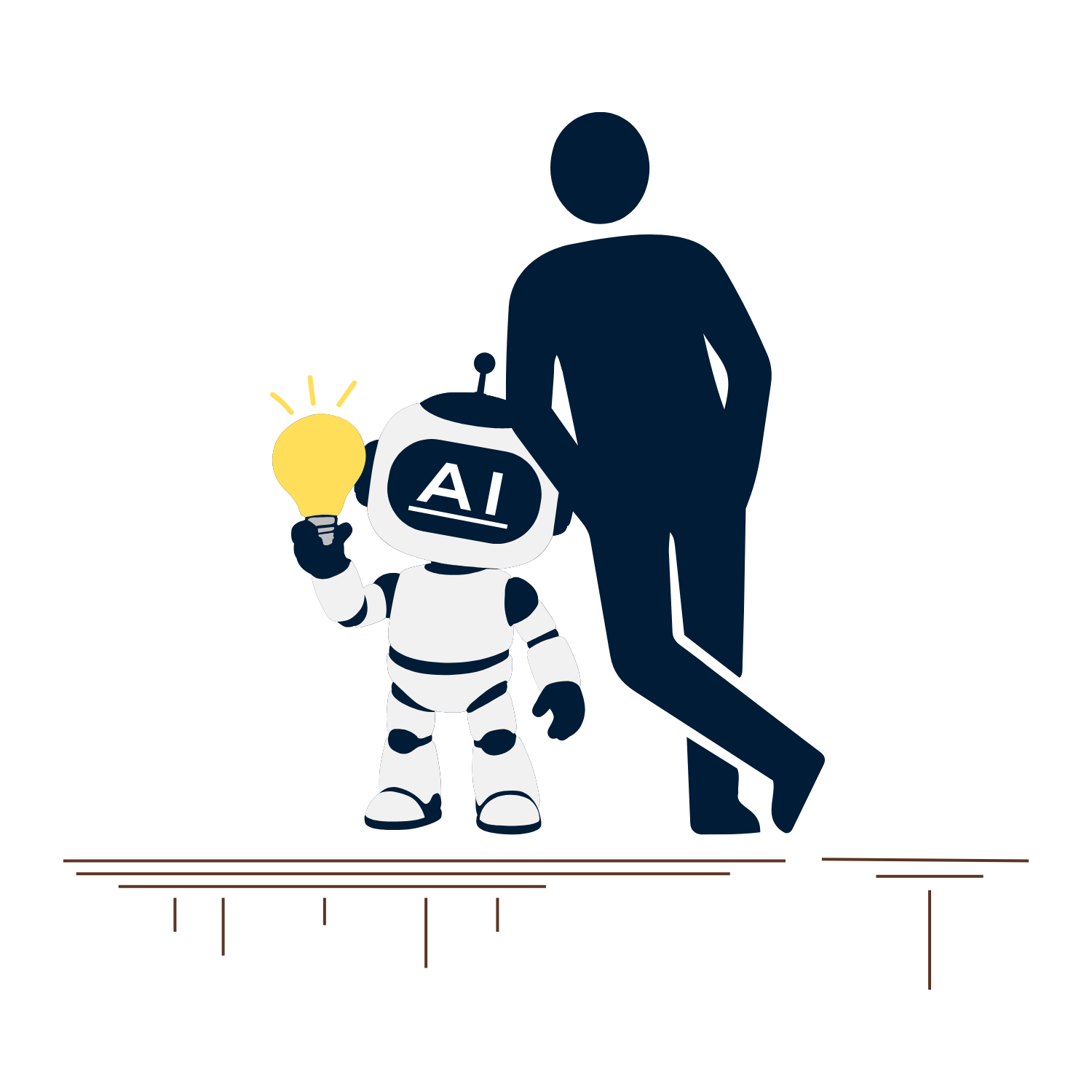
When we utilise AI as a Scaffold, it functions as a powerful ‘Digital Ramp’ that lowers the ‘activation energy’ required for task initiation and bypasses the Amygdala-driven ‘freeze’ response. By offloading the ‘how’, it leaves room for the ‘what’, allowing the neurodivergent brain to focus on conceptual depth and creative growth.
However, when this tool becomes a Crutch, it contributes to ‘cognitive atrophy’ through passive use. This shift can diminish activity in the frontal-parietal networks and create an ‘Illusion of Mastery’ where the brain receives a dopamine hit without the corresponding effort. Ultimately, over-reliance causes memory erosion by stopping the ‘encoding’ process, fundamentally changing the architecture of our brains in the process.
How to Stay "Neural-Positive"
To ensure AI supports rather than hinders your brain, neuroscientists recommend ‘Productive Friction’. Here are a few ways you can help ensure you are using AI to support your brain, not replace it…
Draft First: Always spend 2 minutes thinking or scribbling your own ideas before asking AI. This “primes” your neural networks.
Verify, Don’t Trust: Treat AI as a ‘talented but occasionally lying intern’. This keeps your Evaluative Thinking active.
The ‘Socratic’ Switch: Instead of asking for an answer, ask the AI: “I’m stuck on X. Give me three hints to help me solve it myself.”