- Insights from Dr Sue Wilkinson
- Article
Beyond the Buzzwords: Challenging What You Think You Know About ADHD

Imagine someone with Attention Deficit Hyperactivity Disorder (ADHD). Chances are, what comes to your mind is an 8-year-old boy who cannot sit still, an adult who always loses their keys, or someone who cannot put down their phone and is always distracted. For decades, we have been fed a ‘one-size-fits-all’ caricature of ADHD. It presents a loud, visible image that is usually treated as a straightforward lack of discipline or as something that can be easily fixed with a colour-coded calendar. The trouble is that this picture is missing almost the entire story.
ADHD is not simply a lack of control; it is more like a high-speed train with no brakes or steering wheel. It is exhausting and totally misunderstood. It affects how people process time, regulate intense emotions, and navigate a world built for brains that operate completely differently. To truly support people living with ADHD, we need to look past the myths and listen to lived experiences. We need to rewrite the narrative.
Let’s deconstruct the most common stereotypes:
Myth: ADHD is a childhood phase that people grow out of.
Reality: Many adults live with undiagnosed or late-diagnosed ADHD. Symptoms can change shape over time, shifting from external hyperactivity in childhood to more internal restlessness in adulthood. Adults can feel overwhelmed and experience executive dysfunction.
Myth: If someone can hyperfocus on a hobby, then they can’t have ADHD.
Reality: Hyperfocus is a core feature of ADHD. It can occur when a specific task triggers a dopamine surge, often driven by a strong interest in the task, a draw to novelty, or a sense of urgency to engage with it. This leads to intense time blindness.
Myth: ADHD is just about being disorganised
Reality: ADHD is an executive function disorder. The brain can struggle with prioritising tasks, working memory, emotional regulation and task initiation. People with ADHD often work twice as hard just to keep up with their peers, and this often leads to burnout.
To properly support people with ADHD, we need to start shifting the narrative from the behavioural inconveniences it presents to the internal experiences that people do not often get to see.
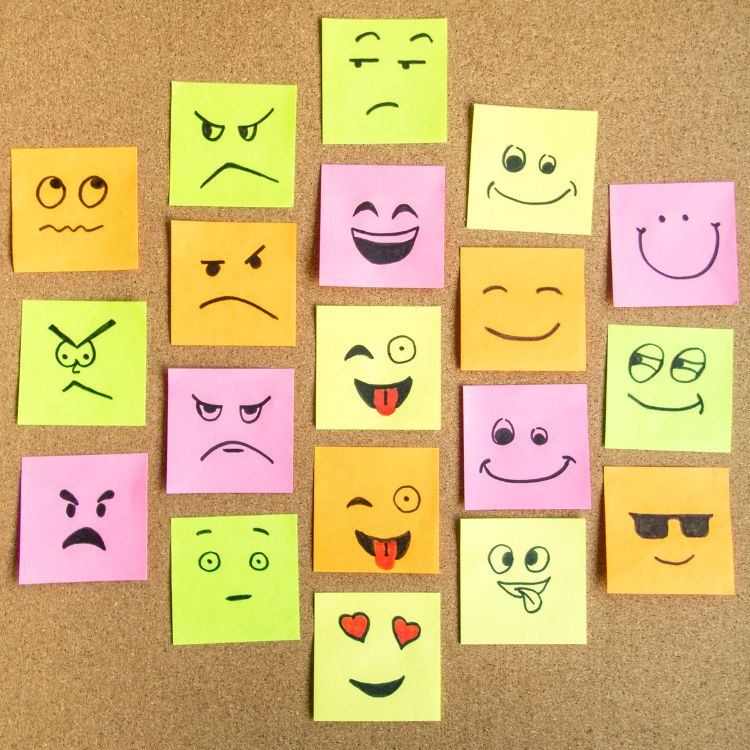
Emotional Dysregulation
For people with ADHD, emotions can be intense and unpredictable, causing tidal waves that can be hard to manage. Emotions are intensely magnified, including rejection-sensitive dysphoria (hypersensitivity to rejection or criticism), easy frustration, or laser-focused interest or enthusiasm for something new. Some may interpret these emotions as dramatic or over the top, but in fact, it is a neurological difference in how the brain processes emotional signals. And it cannot easily be controlled.
Time Blindness
For people with ADHD, the concept of time can be tricky. The mental clock often boils down to either ‘now’ or ‘not now’. If something is not happening in the immediate present, it can feel non-existent for someone with ADHD. Whilst this may appear to be carelessness or disorganisation, it is, in fact, an executive function hurdle that makes planning, estimating task duration, and prioritising feel impossible.

The Exhaustion of Masking
One of the more exhausting parts of ADHD is masking. Masking is the continuous and exhausting effort required for people with ADHD to suppress their natural tendencies and force their brains to operate in a world that was built for neurotypical brains. Burnout is a common experience triggered when people are forced to maintain eye contact, suppress their urge to fidget, or overcompensate for ‘being disorganised’.

Shifting the narrative away from focusing on the challenges can reveal a wide suite of cognitive strengths that people with ADHD often possess but are not seen by others. These include creativity and lateral thinking, hyper-resilience and crisis management, and authenticity and deep empathy. The ADHD brain is not linear; it works in a master-of-web-like manner, making it fantastic for out-of-the-box thinking and problem-solving. Additionally, people with ADHD often excel in fast-paced environments, as routine and monotony can drain their resources. This means that people with ADHD are often decisive leaders when a crisis hits. Lastly and very importantly, people with ADHD develop empathy from having to navigate a world that often misunderstands them. This fosters a deep compassion for others who struggle.
To understand ADHD, we must look past tired old stereotypes and listen closely to actual lived experiences. By acknowledging the hidden exhaustion and the brilliant superpowers of the ADHD brain, we can foster a more inclusive, empathetic culture that values diverse ways of thinking.
More resources by ADHD Pirates CIC
Learn about Autism & ADHD Assessments through our partnership with The Owl Centre
What are the signs of ADHD in adults?
ADHD in adults can look different from the common stereotypes. Alongside difficulties with concentration, some people experience internal restlessness, emotional regulation challenges, time blindness and difficulties with organisation or starting tasks. These experiences aren’t always visible to others, which can make ADHD harder to recognise and understand.
What is ADHD masking, and why can it lead to burnout?
ADHD masking involves hiding or suppressing ADHD-related behaviours to fit in with others’ expectations. This might mean forcing yourself to sit still, hiding difficulties with organisation or working harder to appear in control. Over time, the effort involved can be exhausting and may contribute to stress and burnout.
Can you have ADHD and still be able to focus?
Yes. ADHD doesn’t mean someone is unable to concentrate. Some people experience hyperfocus, becoming deeply absorbed in activities they find interesting or engaging. They may spend hours focused on one task while struggling to begin another. ADHD can affect how attention is regulated, rather than simply how much attention someone has.