- Accessibility
- Ergonomic
- In the Workplace
- Article
Reflections from Clerkenwell Design Week 2026
Inclusive design, ergonomic innovation and mandatory puppy therapy
I am writing this on the train back to Manchester, with a couple of hours to properly reflect on what feels like a successful, busy and thought-provoking trip to Clerkenwell Design Week 2026.
After a week packed with showrooms, talks, new products, old friends, puppies, great food and even better company, there is a lot to take in. Clerkenwell always has a way of bringing together a brilliant mix of people from across the design, interiors, furniture, workplace and wellbeing sectors. This year, though, something felt different.
The conversation felt more human.
Yes, there was still plenty of beautiful furniture, clever product design, sustainable materials and impressive showroom displays. That is what Clerkenwell does so well. But this year, I noticed a much stronger focus on people, particularly how different people experience the environments we ask them to work, learn and live in.
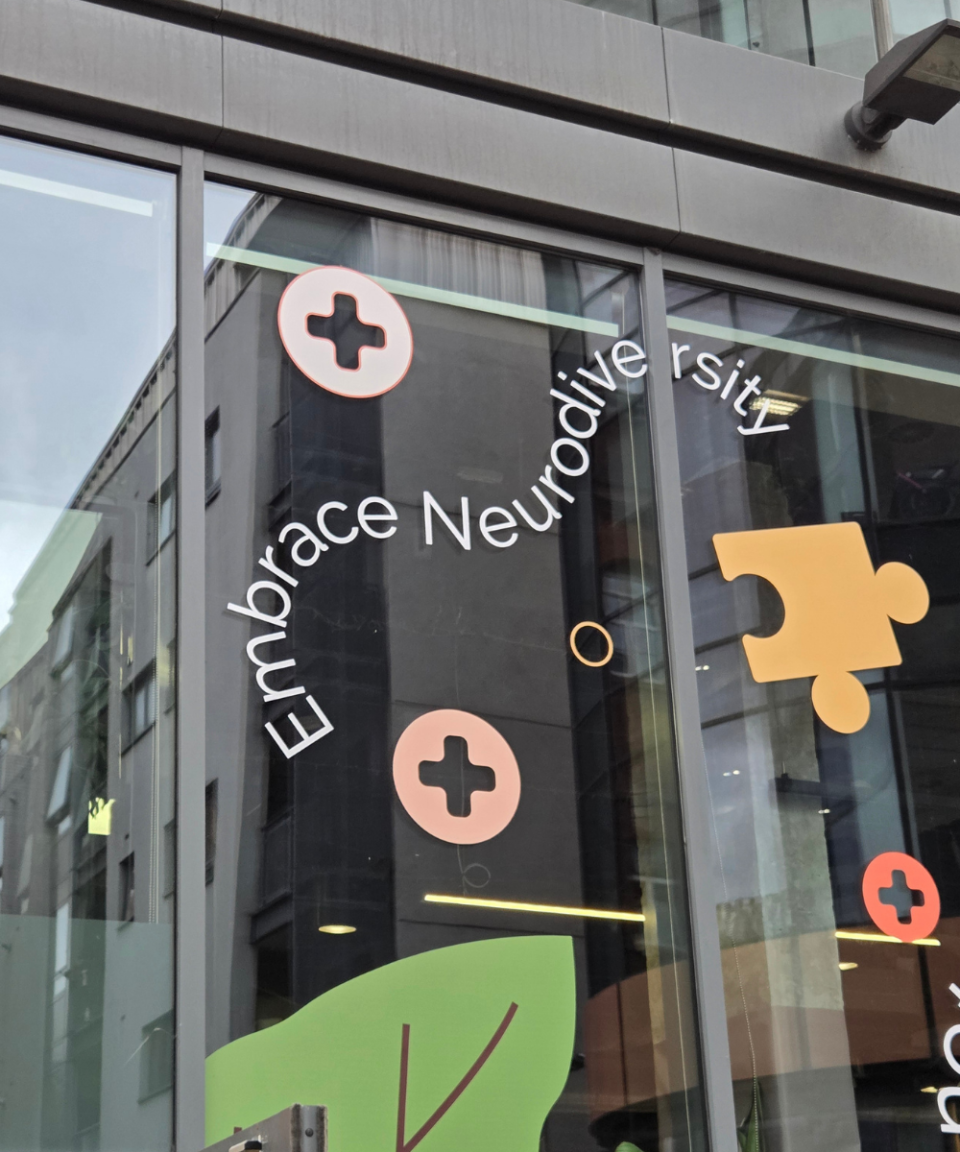
For me, one of the biggest takeaways was the increased visibility of neurodiversity and inclusive design across the week.
Neurodiversity moved closer to the centre of the conversation
I went to Clerkenwell with the intention of speaking to any company that had neurodiversity, accessibility or inclusive design on their agenda. At first, looking through the Clerkenwell app and the programme, I thought I might need to actively seek those conversations out.
What pleasantly surprised me was how often they appeared.
Neurodiversity was spoken about far more than I have ever known before at Clerkenwell Design Week. That might partly be because I was actively looking for it, but it still felt like a genuine shift. Inclusive design was not hidden away as a niche topic. It was being discussed in showrooms, talks and informal conversations across the week.
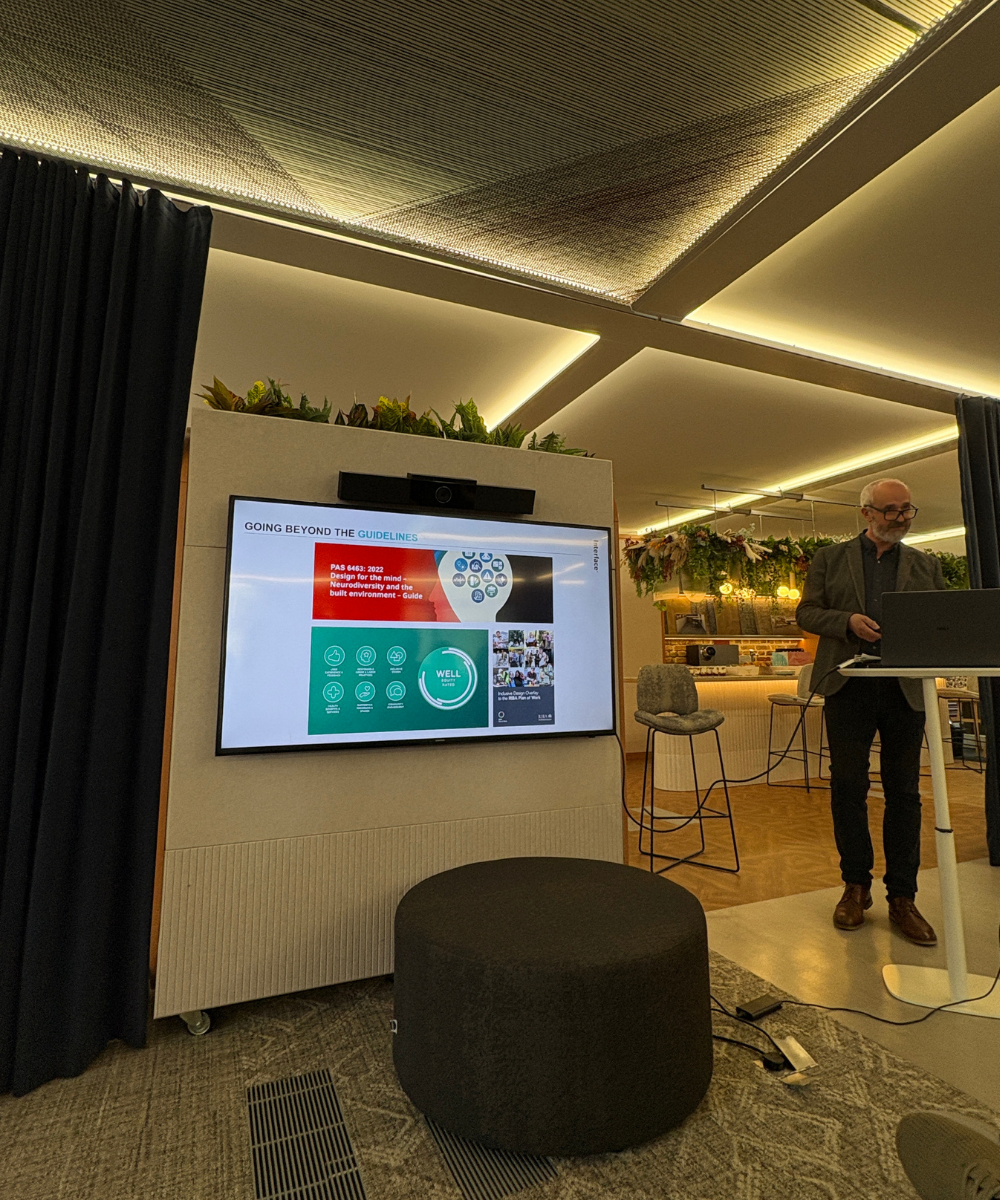
There were several standout sessions. Jim Taylor and Interface’s talk on Designing Inclusive Spaces That Work explored sensory ergonomics and how thoughtful, human-centred design can help remove barriers in corporate and education spaces. The official event description focused on creating spaces where people can do their best work and learning, which felt very aligned with the conversations we have every day at Remtek Workplace. (Clerkenwell Design Week 2026)
Wagstaff and Umbrella’s Embracing Neurodiversity: A Sensory Journey into the Workplace was another clear example of where the industry seems to be heading. Their programme focused on sensory-informed workplace design, immersive experiences and knowledge sharing around neurodiversity in the workplace. (Eventbrite)
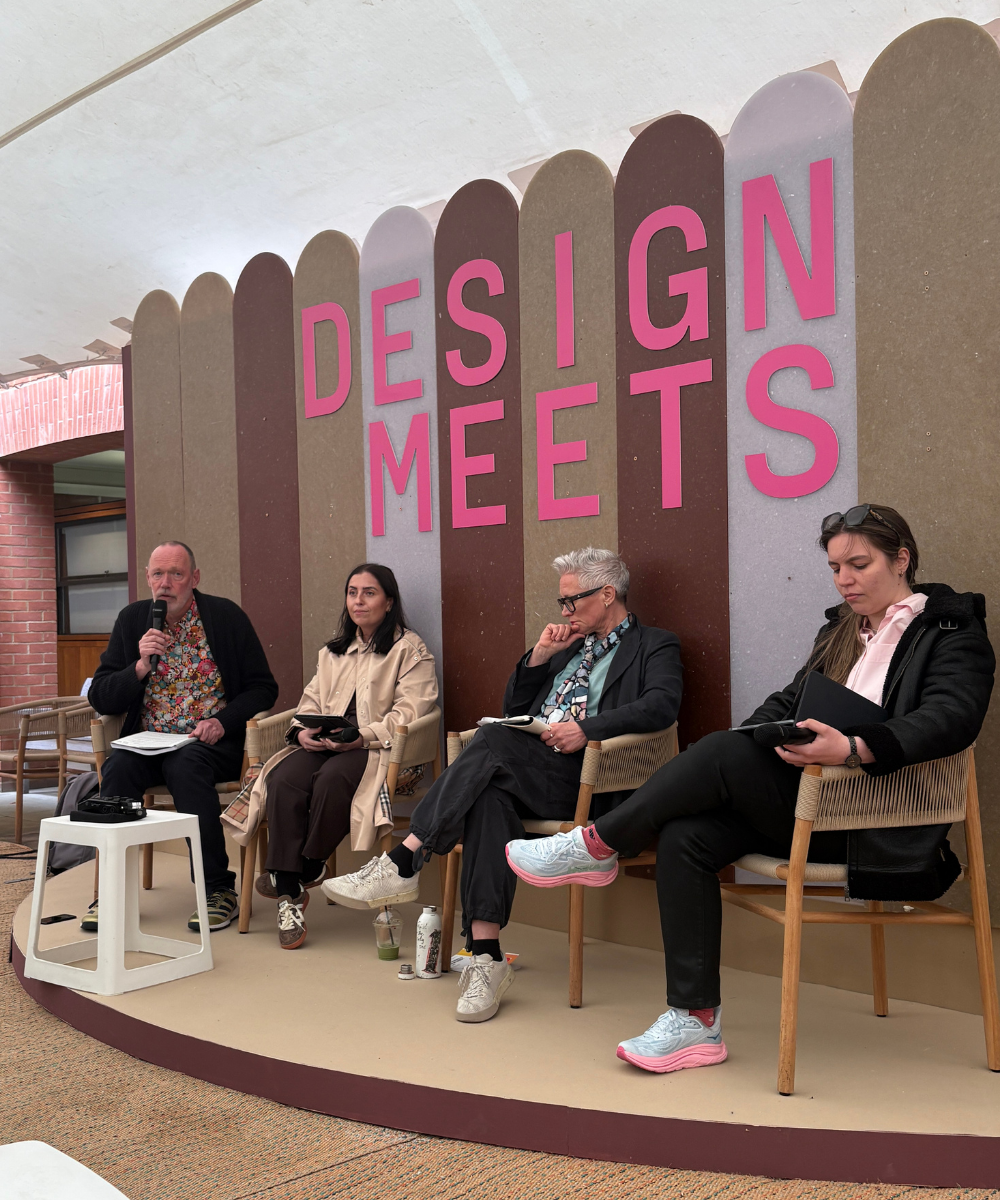
I also found Neuroinclusive Design by neurodivergent designers, chaired by Piers Roberts, particularly encouraging. The session brought together neurodivergent designers, educators and entrepreneurs to explore how neurodivergent perspectives can positively shape the design of spaces. (Clerkenwell Design Week 2026)
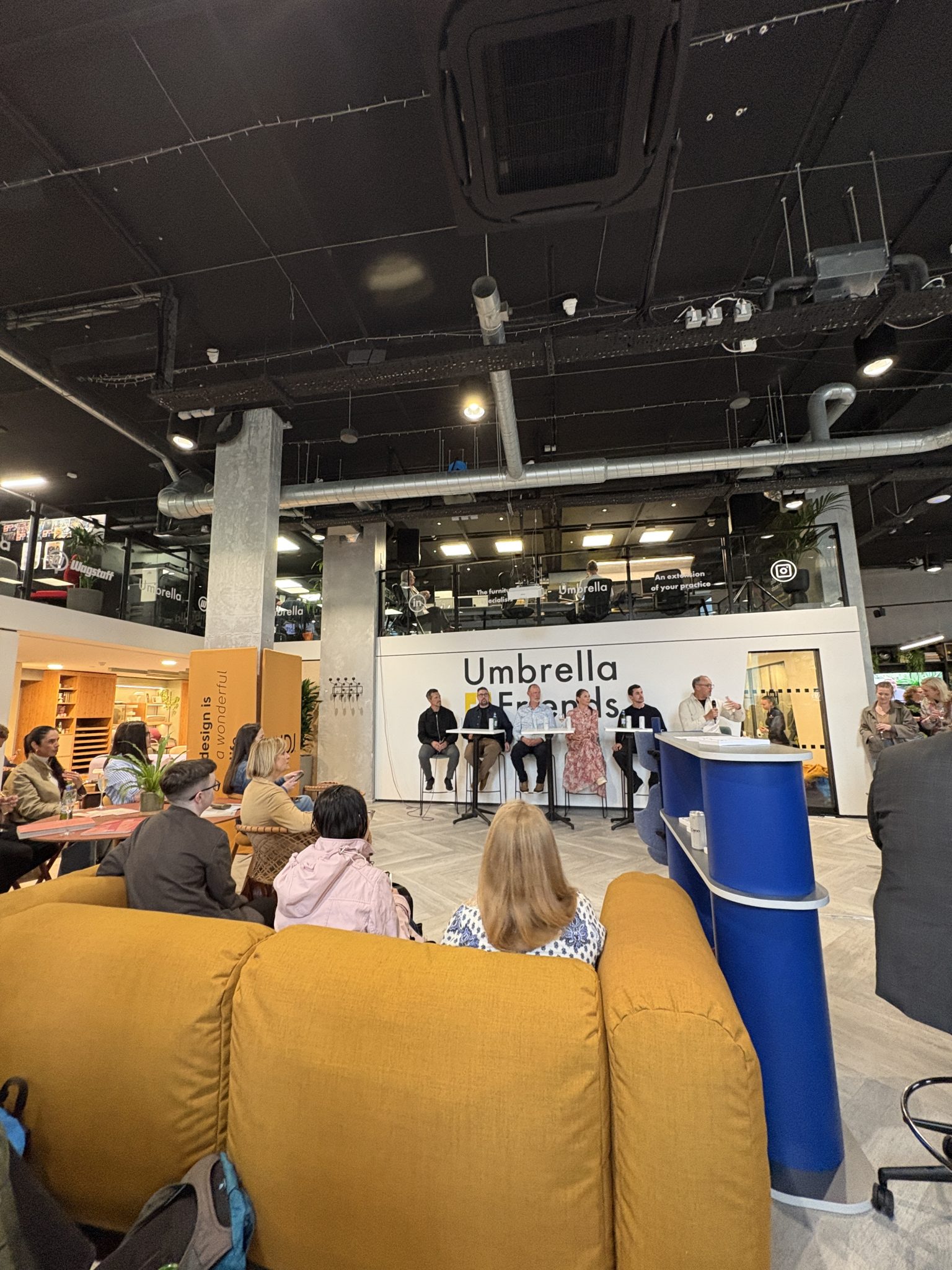
What stood out was that these were designer and architect-led conversations. The focus was often on how neuroinclusive thinking fits naturally into their world, through lighting, acoustics, texture, materials and sensory experience. There was a lot of discussion around tactile environmental details, such as stone, woodgrain and softer material choices.
There was less discussion around reasonable adjustments, assistive technology or Access to Work. In fact, Access to Work was only mentioned once in the sessions I attended. But that is not necessarily a criticism. What I heard instead was a much broader conversation around universal design, and the importance of getting things right at the planning stage rather than treating neurodiversity, accessibility and ergonomics as an afterthought.
That is an important distinction.
Reasonable adjustments will always matter. Assistive technology will always have a place. Individual support will always be needed. But if we can design environments from the start with different brains, bodies and sensory needs in mind, we reduce the number of barriers people are forced to navigate later.
That is where workplace design, ergonomics and inclusion really start to connect.
The AirPoise chair and a different way of thinking about support
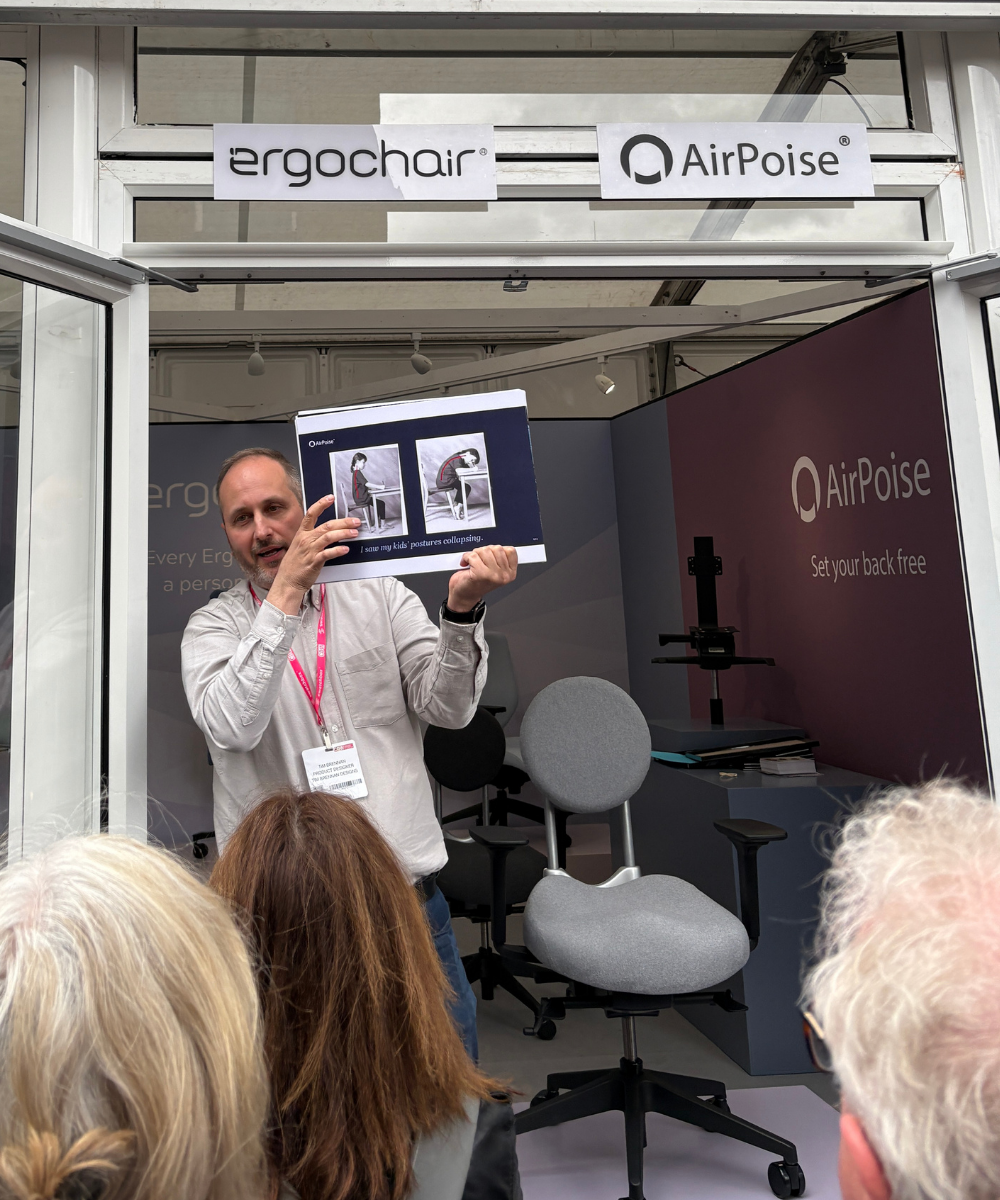
Another highlight was seeing the AirPoise chair, designed by Tim Brennan, the creator of Vivobarefoot. AirPoise describes itself as taking a different approach to sitting by supporting the upper back while allowing the spine to move naturally. (airpoise.com)
I love a good unique chair, and this was certainly one that stood out.
In a market that is already flooded with ergonomic seating, it takes something genuinely different to make people stop and pay attention. For me, the most interesting feature was the thoracic positioning of the back air cell. Rather than focusing purely on the lumbar region, which has become the default design language for many ergonomic chairs, AirPoise appears to take a broader view of posture, balance and movement.
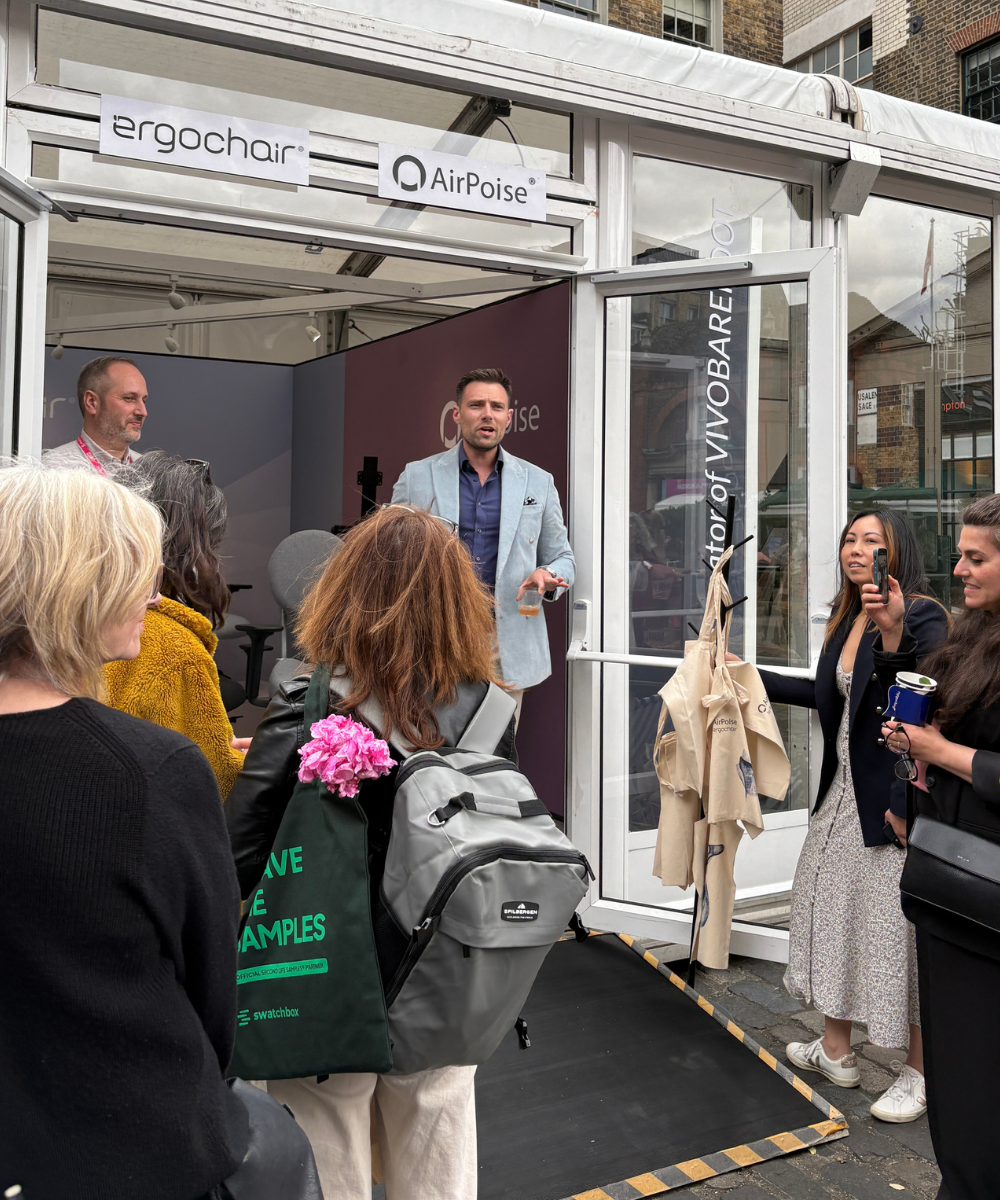
The chair itself was interesting, but so was Tim’s story. You could see his experience and passion for the project coming through. This was not just another chair launch. It felt like a concept with a point of view.
It also felt fitting that Ergochair are involved in supporting the project. As one of the UK’s leading bespoke ergonomic chair manufacturers, they are well placed to help bring something like this into the wider conversation around workplace seating and individual support.
Will it be for everyone? Probably not. No chair is. But could it become a game-changing seating experience for the people who can get behind the concept and respond well to that style of support? Absolutely.
And that, really, is what good ergonomic design should be about. Not pretending that one product solves every problem, but understanding that different people need different routes to comfort, movement, stability and support.
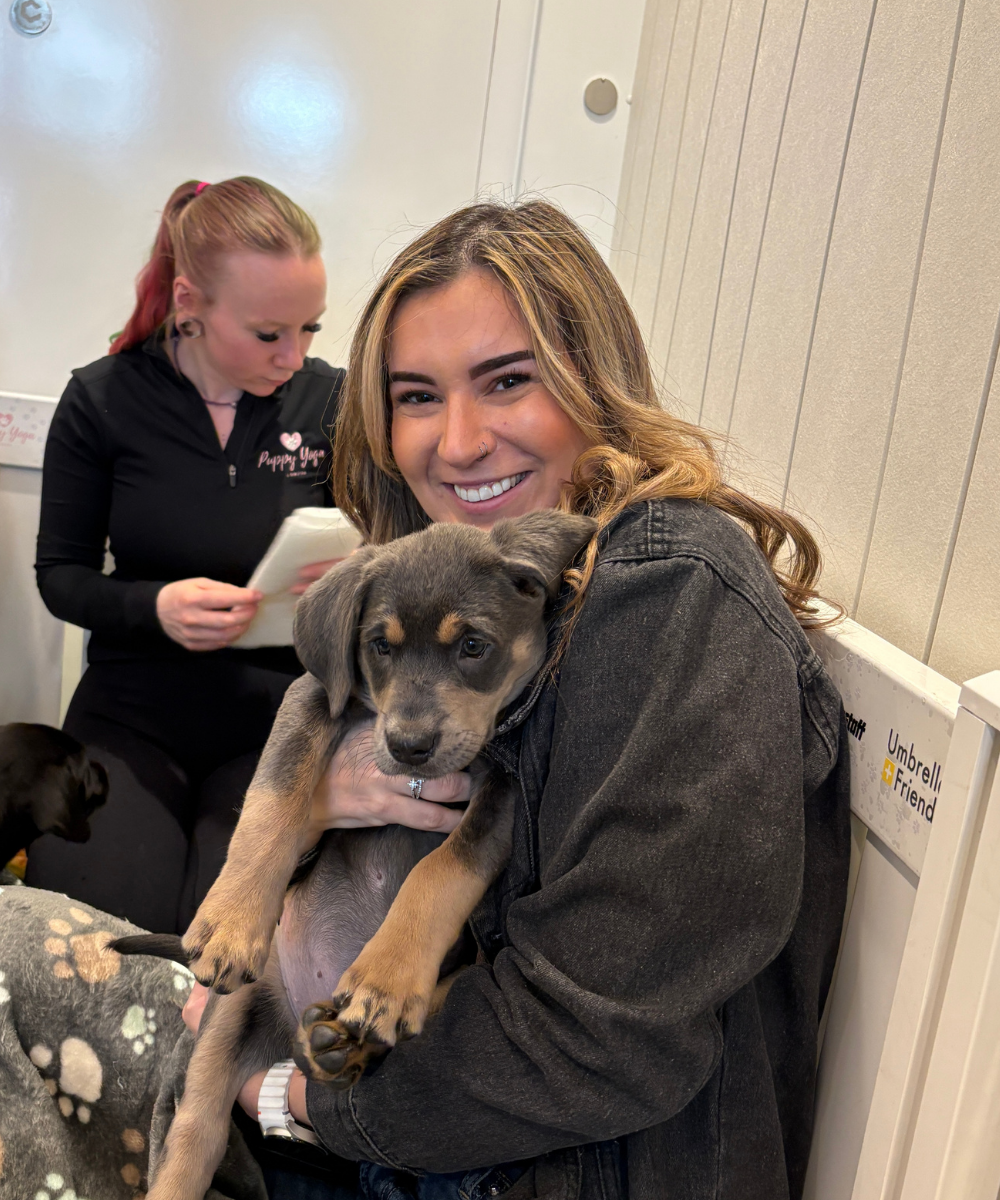
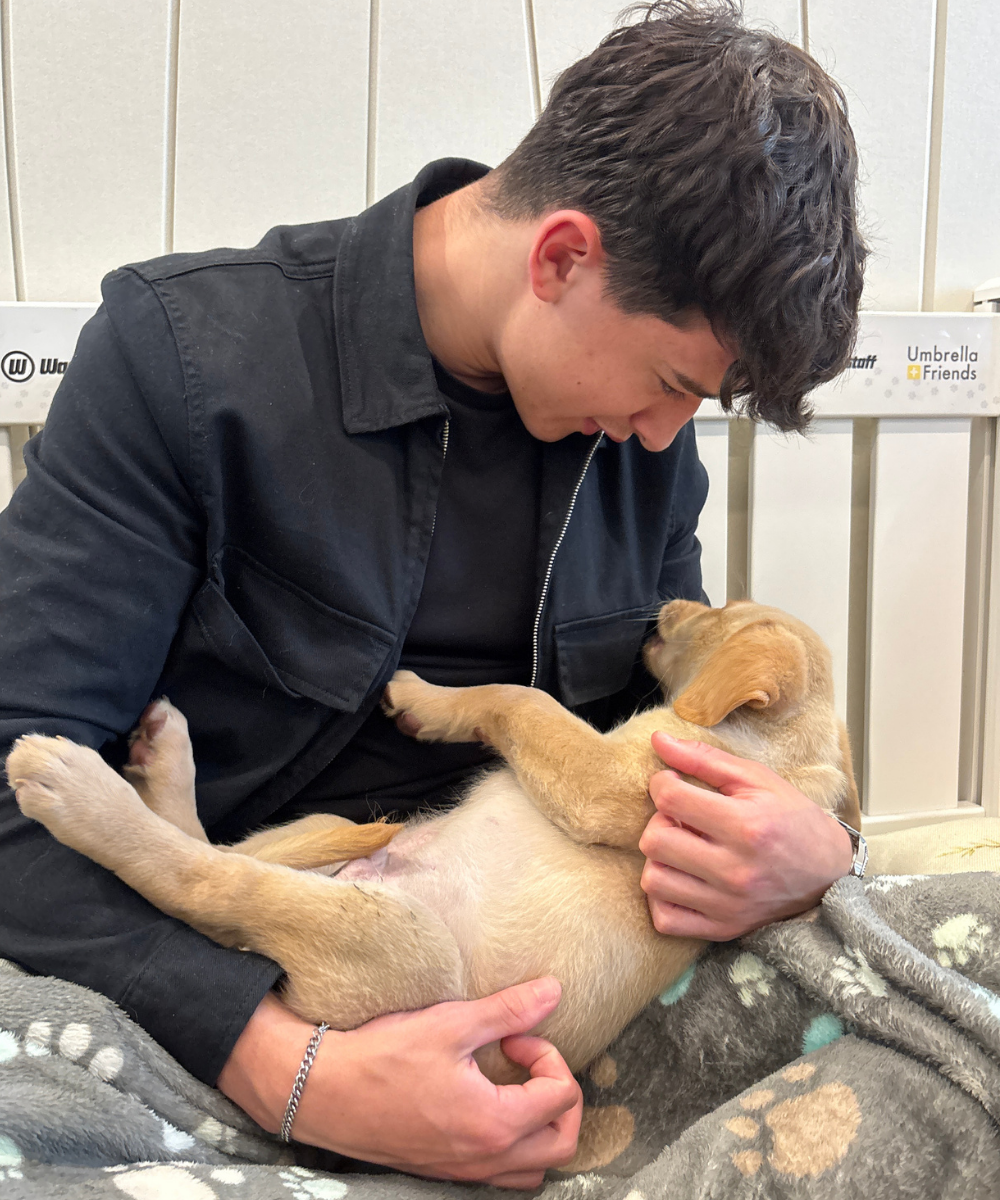
A serious point about puppies
Now, on to the most important policy position I took away from the week.
Puppy therapy should be more normalised.
In every office. Every school. Every pub. Possibly every train station.
If I ever go into politics, that will be my manifesto. Mandatory puppy therapy for all.
In all seriousness, it was a brilliant reminder that workplace wellbeing does not always need to be overcomplicated. Sometimes the moments that reset people are simple, human and joyful. A short interaction, a bit of playfulness, a reason to pause, a shared laugh, or a small break from the constant pace of the day can make a real difference.
Of course, I am not suggesting that puppies are a replacement for proper workplace support, inclusive design, good management or reasonable adjustments. But I am absolutely suggesting that more workplaces could benefit from thinking about how people feel in a space, not just how the space looks.
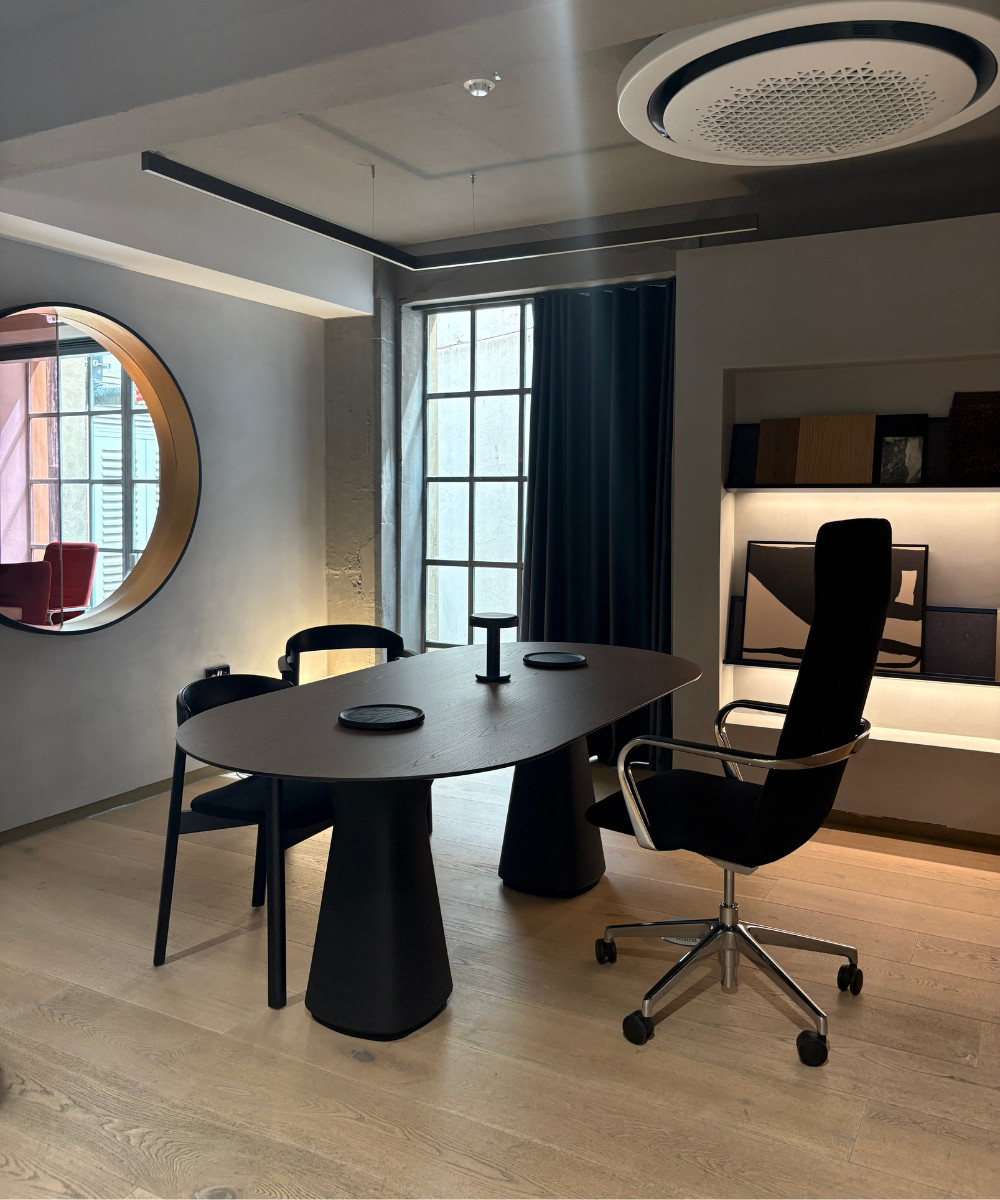
A well-designed workplace should support focus, movement, collaboration, privacy, regulation and recovery. Sometimes that might be through acoustic design, lighting, furniture and layout. Sometimes it might be through quiet spaces, natural materials and sensory consideration.
And sometimes, apparently, it might involve puppies.
Sustainability was still there, but the human focus felt stronger
Sustainability was also clearly present throughout the week. Circular design, repurposed furniture and more conscious material choices were evident across a number of showrooms and conversations.
That is encouraging, and it remains a critical part of the future of workplace design. The industry cannot talk seriously about better spaces without talking about the environmental impact of the products, materials and supply chains behind them.
But what felt particularly noticeable this year was that sustainability was not the only major theme in the room. The strongest shift, at least from my perspective, was towards human-focused inclusive support and design.
It was not sustainability or inclusion. It was both.
The best conversations seemed to understand that the future of workplace design has to balance environmental responsibility with human responsibility. We need spaces that are lower impact, longer lasting and more adaptable. But we also need spaces that genuinely work for the people using them.
That means thinking about neurodivergent employees. Disabled employees. People with sensory sensitivities. People with pain, fatigue, anxiety, visual impairments, hearing impairments or fluctuating health conditions. People who do not fit neatly into the old assumptions about what a “standard” worker needs from a “standard” office.
That is where the work gets more interesting.
Friends, colleagues and the Godfather of Ergonomics
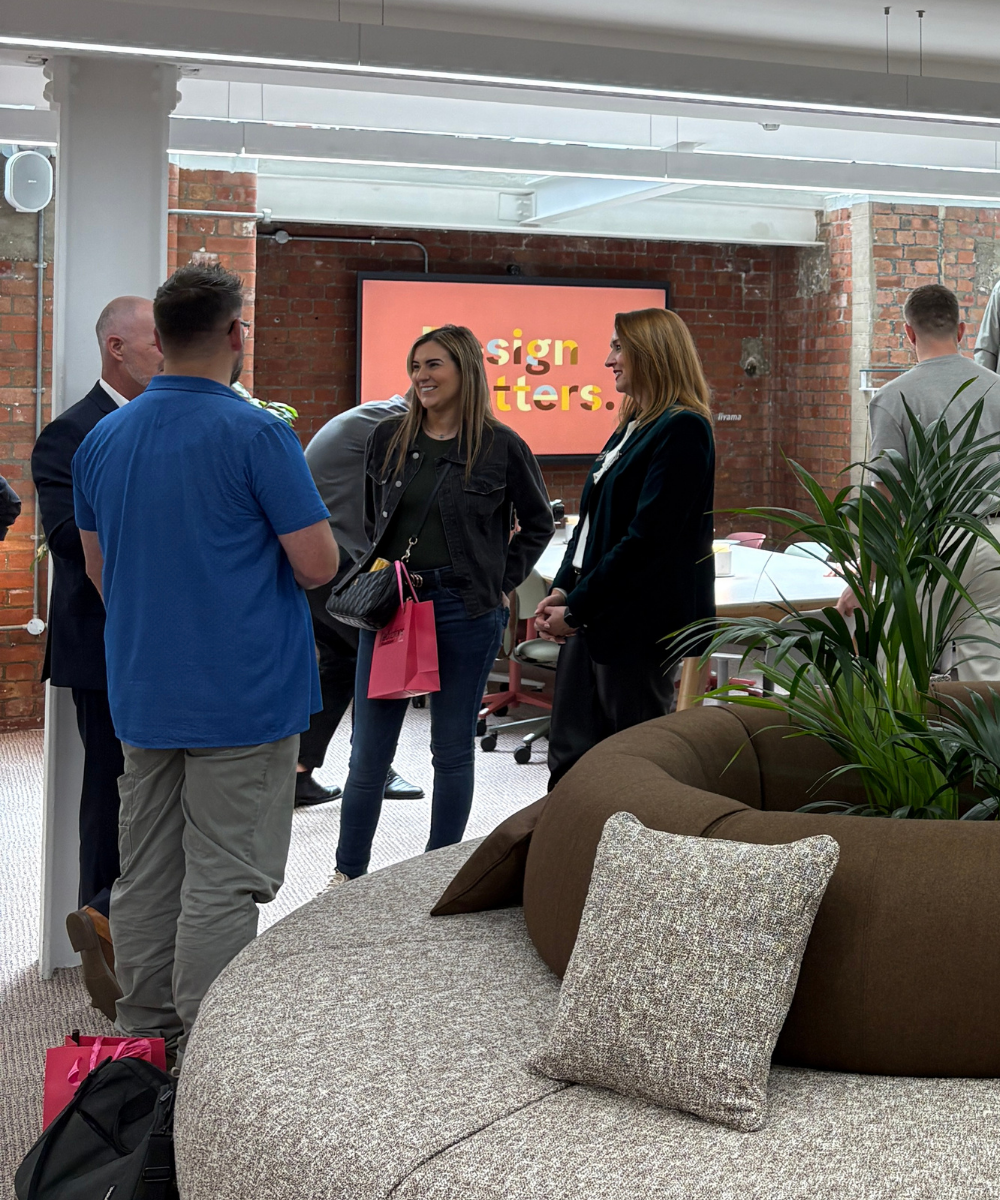
One of the best parts of Clerkenwell is the people it brings together.
Across the week, it was great to catch up with friends, colleagues and partners from across the industry, including Ergochair, Flokk, Clarebrook, Lavoro, Viasit and many more. These conversations matter. They are where ideas get tested, partnerships develop and the gaps between product, service and real-world need start to close.
It was also good to spend time with Guy Osmond, the godfather of ergonomics, who we somehow seem to see more of now he is retired than we did when he was working.
I am not sure that is how retirement is meant to work, but we are not complaining.
Those informal conversations are often just as valuable as the scheduled talks. Clerkenwell has a way of bringing together people from different parts of the country, different corners of the industry and different perspectives, all with a shared interest in making the world of work better, more thoughtful and more beautiful.
What this means for Remtek Workplace
For Remtek Workplace, the week reinforced something we already see every day.
Inclusive design cannot sit in isolation. Ergonomics, assistive technology, workplace adjustments, coaching, sensory environments, product selection and organisational culture are all connected.
A chair can support someone physically. Lighting can reduce sensory overload. Acoustic design can improve focus. Assistive technology can remove barriers in reading, writing, organisation or communication. Coaching can help someone build strategies around executive function, confidence or workplace interaction. A good workplace assessment can bring all of those threads together into something practical.
But the earlier we have these conversations, the better the outcome.
If neurodiversity and ergonomics are only considered once someone is struggling, we have already missed an opportunity. Clerkenwell showed that more designers, architects, manufacturers and workplace specialists are beginning to understand that inclusion should be part of the design process from the start.
That is encouraging.
It also means there is a real opportunity for closer collaboration between the design world and those of us working directly with disabled and neurodivergent people in employment. Designers and architects bring creativity, spatial understanding and material knowledge. Workplace assessors, ergonomists, coaches and assistive technology specialists bring insight into lived barriers, functional needs and practical support.
The best workplaces will come from combining those perspectives.
Final thoughts from the train home
As the train heads back to Manchester, I feel optimistic.
Clerkenwell Design Week 2026 was full of impressive products, beautiful spaces and clever ideas. But more importantly, it felt like the conversation is moving in the right direction.
Inclusive design is no longer just a side conversation. Neurodiversity is no longer only being discussed after the fact. More people are recognising that the environments we create have a direct impact on comfort, confidence, wellbeing and performance.
There is still a long way to go. We need more discussion around assistive technology, Access to Work, individual adjustments and the practical steps employers can take after the showroom inspiration fades. But the fact that universal design, sensory experience and neuroinclusion were so visible this year is a positive sign.
Clerkenwell reminded me that good design is not just about how a space looks.
It is about how it feels.
It is about who it includes.
And, occasionally, it is about whether there are puppies.