- Ergonomic
- Standing Desks
- Article
What is a Standing Desk?
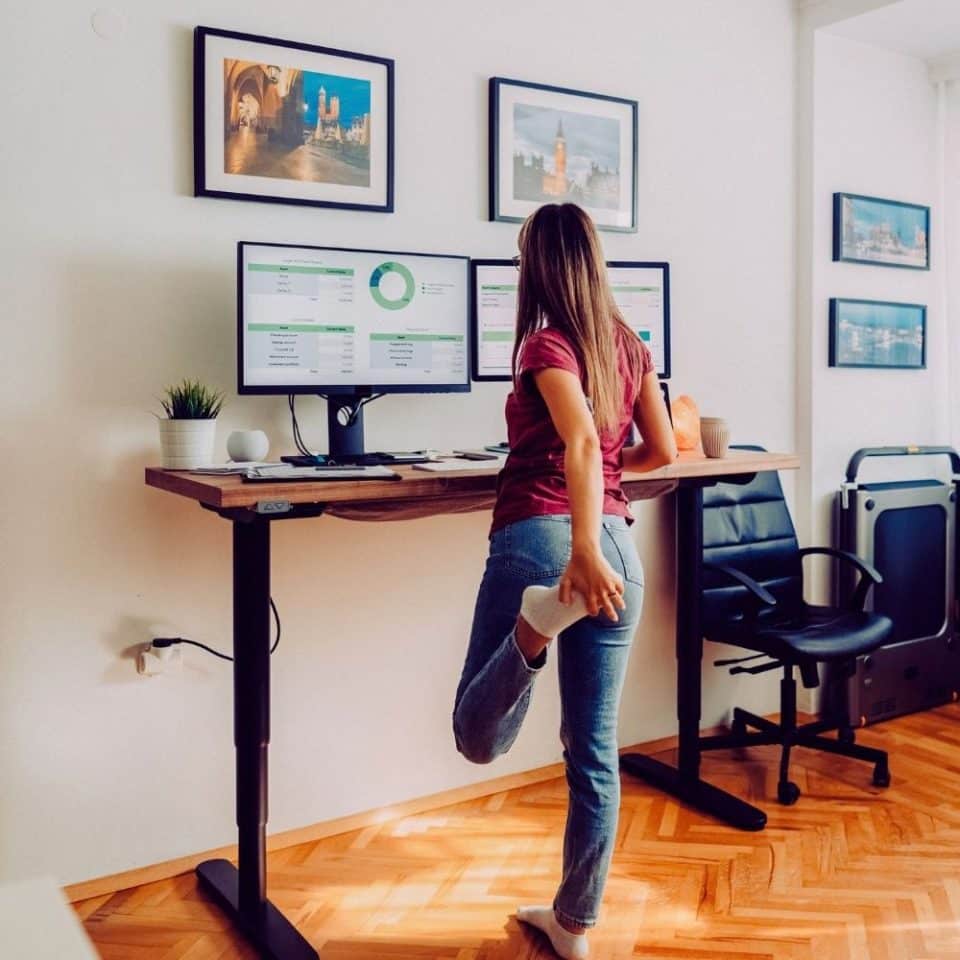
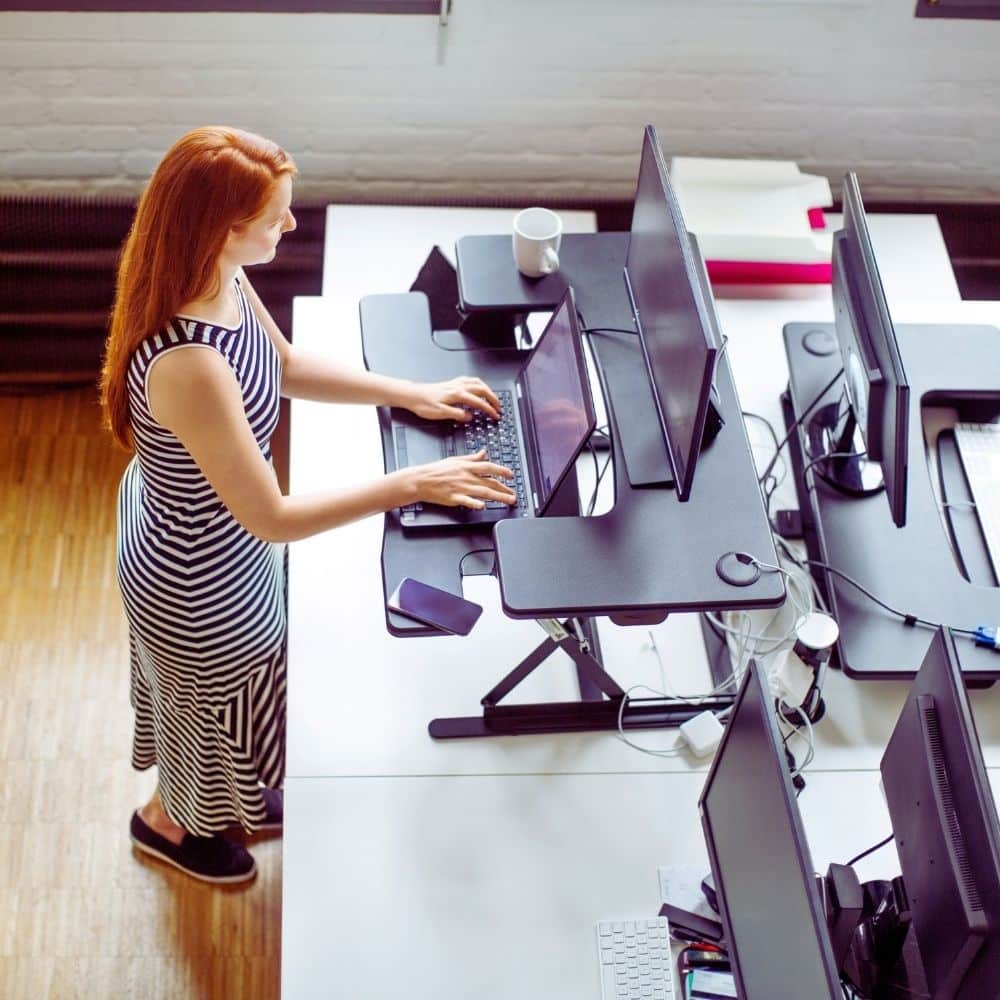
A standing desk is a desk designed to let you work while standing rather than sitting. Some stay at a fixed standing height, while others move between sitting and standing positions. Standing desk converters sit on top of an existing desk and raise your screen, keyboard and mouse.
The main purpose is to give you another working position. Instead of spending the whole day seated, they can make it easier to change posture, move more regularly and reduce long periods of uninterrupted sitting.
How does they work?
There are three main options:
- Fixed-height standing desks stay at one height and are mainly designed for standing.
- Sit-stand desks can be raised or lowered, usually using an electric motor or manual mechanism, so you can alternate between sitting and standing.
- Standing desk converters sit on an existing desk and raise your working equipment without replacing the whole desk.
There is no single best option. The right choice depends on your height, tasks, equipment and available space.

What’s it used for?
A standing desk is mainly used to introduce more movement and postural variation into desk-based work. It is not about replacing sitting with standing all day.
The strongest evidence is around reducing sedentary time. A 2025 systematic review found that sit-stand desk interventions reduced sitting during working hours by around 48 to 88 minutes per day at different follow-up points compared with control groups. (PubMed)
That does not mean they automatically deliver major health improvements. A meta-analysis of workplace interventions found that reducing sitting was achievable, but significant improvements were not seen across most physical or psychological outcomes. (PubMed)
The practical benefit is simpler: an adjustable workstation can make it easier to avoid staying in one position for too long.
Can they improve posture and concentration?
A standing desk can support a more comfortable working posture, but only when the workstation is set up properly.
Standing badly is not better than sitting badly. If the desk is too high, you may lift your shoulders. If it is too low, you may lean forwards. A poorly positioned screen can still encourage awkward neck and upper-body positions.
The Health and Safety Executive recommends positioning the top of the screen around eye level and the keyboard just below elbow height. It also recommends changing activity and posture regularly rather than remaining in one position for long periods. (HSE)
Claims around concentration also need perspective. A review found that sit-stand desks did not appear to harm work performance, but evidence for improvements in focus or productivity remains mixed. Some people may feel more alert when they change position, but this is not a guaranteed outcome. (PMC)
What is the best height for a standing desk?
There is no universal height.
For computer work, a useful starting point is to set the desk so the keyboard is around elbow height. Your shoulders should feel relaxed and your wrists should remain in a neutral position.
The screen should then be adjusted so you can view it comfortably without repeatedly looking down or leaning forwards. If you use a laptop for prolonged work, a separate keyboard and mouse can make this easier. (HSE)
The best height therefore depends on the person and the task, rather than a single measurement from the floor.
How to use a standing desk
They work best when it encouraging movement rather than replacing one static posture with another.
There is no single amount of standing time that is right for everyone. Switch between sitting and standing throughout the day and change position before discomfort or fatigue develops. The HSE recommends short, frequent breaks or changes of activity during display screen work, with opportunities to get up, move around, stretch and vary posture. (HSE)
When standing, keep frequently used equipment within easy reach and make sure you have enough space to move your feet and change stance comfortably.
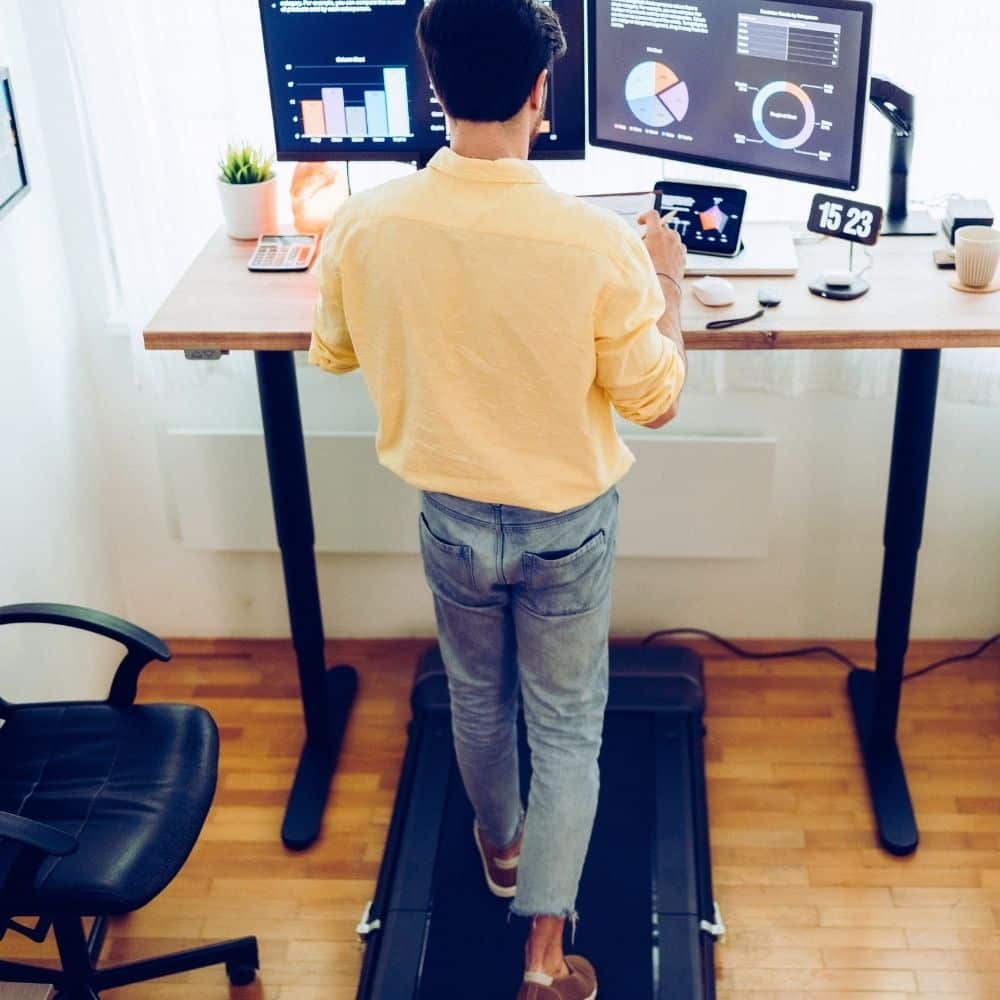
Some people may even use a walk pad with their standing desk for increased movement throughout the day.
Should you choose a standing desk or a desk converter?
A full sit-stand desk may suit you if you want a large adjustable work surface, use multiple screens or plan to change position regularly.
A standing desk converter may be more practical if you already have a suitable desk or want to add a standing option without replacing existing furniture.
A fixed-height standing desk can suit particular tasks, but it provides less flexibility across a full desk-based working day.
Whichever option you choose, the equipment needs to suit the person using it. A desk chosen from a height chart alone can still result in an uncomfortable setup.
Find the right desk for your setup
A standing desk can be a useful part of an ergonomic workstation, but choosing the right type and setting it up correctly matters more than simply owning one.
Remtek Workplace can assess your existing workstation, the tasks you carry out and how you use your equipment, then recommend whether a fixed-height desk, sit-stand desk or converter is appropriate.
If you are unsure which type suits your setup, speak to Remtek Workplace about a workplace assessment or equipment consultation.
Frequently asked questions
What is a standing desk, and how is it different from a regular desk?
A standing desk allows you to work while standing. It may be fixed at standing height or adjustable so you can move between sitting and standing.
Do standing desks actually have proven health benefits?
The clearest evidence is that sit-stand desks can reduce sitting time at work. Evidence for wider health, concentration and productivity improvements is less certain, so they are best viewed as a way to encourage movement and postural variation.
Should I get a full standing desk or a desk converter?
It depends on your current desk, available space, equipment and working habits. A sit-stand desk provides a larger adjustable surface, while a converter adds a standing option to an existing desk.
How long should I stand at a standing desk each day?
There is no single target for everyone. Alternate between sitting and standing, change position regularly and avoid waiting until you feel uncomfortable before moving.