Intro
Modern working life often involves spending many hours seated at a desk. While office work may appear physically undemanding, long periods of sitting can place considerable strain on the body, particularly the lower back. Without appropriate support, the spine can gradually move away from its natural alignment, leading to discomfort, fatigue, and poor office seating posture.
Lumbar support plays an important role in addressing this issue. By supporting the natural curve of the lower spine, a well-designed ergonomic chair helps maintain a healthier sitting position throughout the working day. For people who spend extended periods at a desk, understanding how lumbar support works can make a meaningful difference to both comfort and long-term wellbeing.
In this article, we explore what lumbar support is, why it matters when sitting for long periods, and how ergonomic office chairs are designed to support the lower back more effectively.
What Is Lumbar Support?
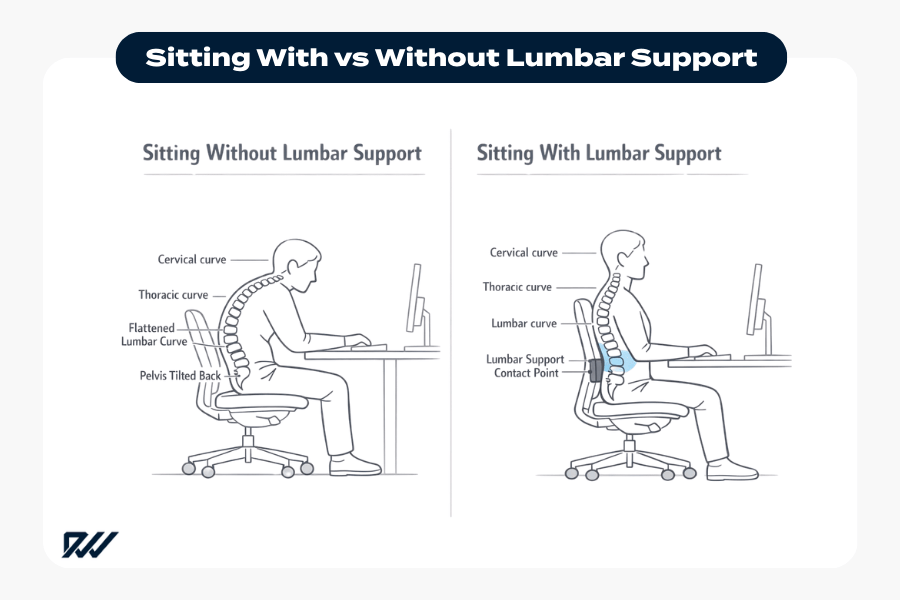
The term lumbar refers to the lower portion of the spine, located between the ribcage and the pelvis. This region naturally curves slightly inwards, forming part of the spine’s overall S-shaped structure. This natural curve is essential because it helps distribute body weight evenly and absorb the stresses placed on the spine during everyday movement and posture.
When sitting for long periods, particularly in chairs that lack proper ergonomic design, this natural curve can flatten. As a result, the lower back receives less support, which can lead to slouching and increased pressure on spinal discs and surrounding muscles. Over time, this may contribute to discomfort or persistent lower back strain.
Lumbar support is designed to maintain this natural curve while seated. In an ergonomic office chair, the backrest typically includes a shaped or adjustable section that fits into the curve of the lower back. By gently supporting this area, lumbar support helps keep the spine aligned and encourages a more stable and comfortable sitting position.
Why Lumbar Support Matters When Sitting for Long Periods
Many modern jobs require people to remain seated for extended periods, often in front of a computer. While this may seem harmless, prolonged sitting can place sustained pressure on the lower back, particularly if the chair does not provide adequate support. Over time, this can contribute to poor posture, muscle fatigue, and discomfort in the lumbar region.
Without proper lower back support, the pelvis may tilt backwards as the body relaxes into the chair. This causes the spine to lose its natural curve and encourages slouching, which increases strain on spinal discs and surrounding muscles. When repeated day after day, this posture can lead to ongoing back discomfort and reduced overall comfort during the working day.
Lumbar support helps counteract this problem by supporting the lower spine and encouraging a more balanced sitting position. By maintaining the spine’s natural curve, an ergonomic office chair can help reduce unnecessary strain and promote healthier office seating posture during long periods at a desk.
How Lumbar Support Helps Maintain Proper Posture
Good posture when sitting involves keeping the spine aligned so that the head, shoulders, and hips remain in a balanced position. However, maintaining this alignment for long periods can be difficult without adequate support, particularly in chairs that have flat or poorly designed backrests.
Lumbar support works by filling the space between the lower back and the chair backrest. This gentle support encourages the spine to maintain its natural inward curve rather than collapsing into a slouched position. As a result, the upper body remains more upright and the muscles of the back do not have to work as hard to support the body.
In an ergonomic chair, lumbar support is often integrated into the design of the backrest or provided through adjustable mechanisms. These allow users to position the support so it aligns with the natural curve of their lower back. By helping maintain proper spinal alignment, lumbar support contributes to a more stable, comfortable, and sustainable sitting posture throughout the working day.
Key Benefits of Lumbar Support in an Office Chair
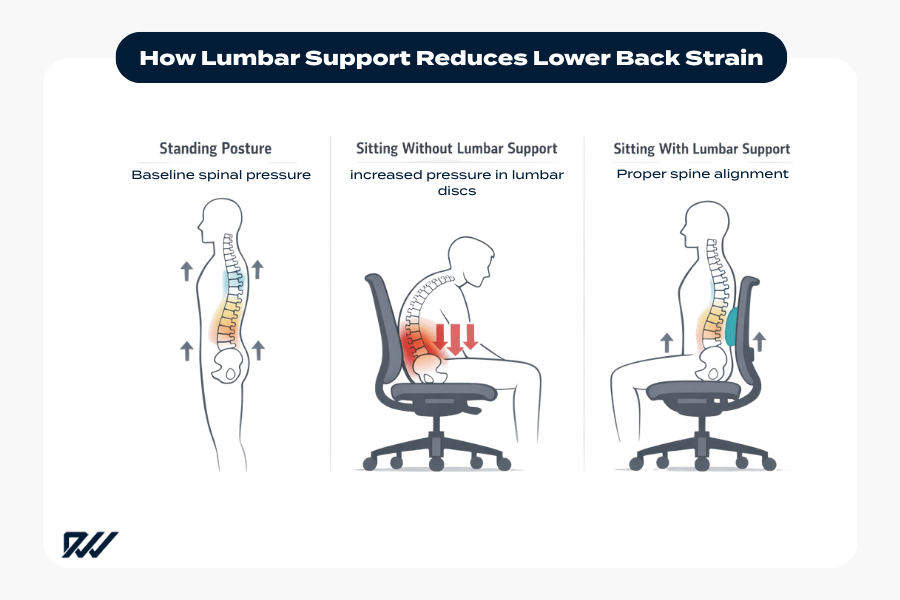
An ergonomic office chair with effective lumbar support offers several important benefits for people who spend long periods seated. One of the most immediate advantages is improved comfort. By supporting the lower back and maintaining the spine’s natural curve, lumbar support helps distribute body weight more evenly across the chair, reducing pressure on the lower spine.
Another key benefit is the reduction of strain on muscles and spinal discs. When the lower back is unsupported, the muscles surrounding the spine often have to work harder to maintain posture. Over time, this can lead to fatigue and discomfort. Proper lower back support allows these muscles to relax, helping the body maintain a more natural sitting position throughout the working day.
Lumbar support can also contribute to improved focus and productivity. When seating is uncomfortable, it can be difficult to remain concentrated for long periods. A well-designed ergonomic chair helps create a more supportive environment, allowing users to work for longer stretches without the distraction of back discomfort.
Adjustable vs Fixed Lumbar Support
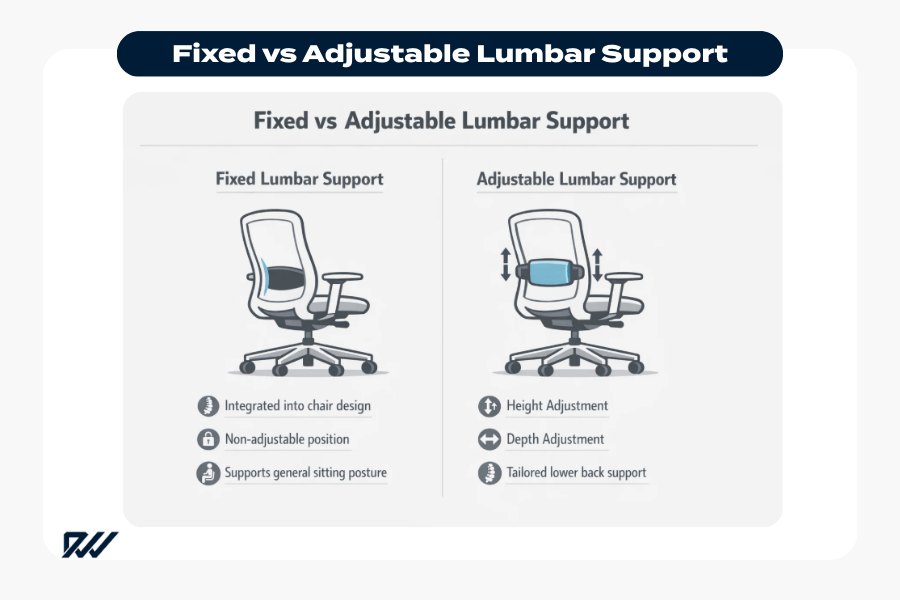
Not all office chairs provide the same type of lumbar support. Some chairs include fixed lumbar support, where the support is built directly into the shape of the backrest. While this can still encourage better posture than a completely flat backrest, it may not suit every user, as individuals vary in height, body shape, and spinal curvature.
Adjustable lumbar support offers greater flexibility. In an ergonomic chair, the lumbar support can often be moved vertically, adjusted in depth, or altered through tension controls. This allows users to position the support so that it aligns precisely with the natural curve of their lower back.
The ability to adjust lumbar support is particularly valuable in shared office environments or workplaces where multiple people may use the same chair. By tailoring the support to individual needs, adjustable lumbar systems help ensure that each user can achieve a comfortable and supportive seating position.
Choosing an Ergonomic Chair with Effective Lumbar Support
When selecting an ergonomic office chair, lumbar support should be one of the key features to consider. A well-designed chair supports the natural curve of the spine and allows users to maintain a comfortable and balanced posture throughout the working day. However, the effectiveness of lumbar support often depends on how well it can be adjusted to suit individual body shapes and seating preferences.
One important feature to look for is an adjustable backrest. Chairs that allow the backrest height or tilt to be altered can help ensure the lumbar support aligns correctly with the lower back. If the support sits too high or too low, it may not provide the intended ergonomic benefit.
Seat depth and overall chair adjustability also play a role. A seat that allows the user to sit with their back fully against the backrest helps ensure the lumbar support is positioned correctly. In addition, adjustable armrests and seat height can help maintain proper alignment between the hips, spine, and shoulders, supporting healthier office seating posture.
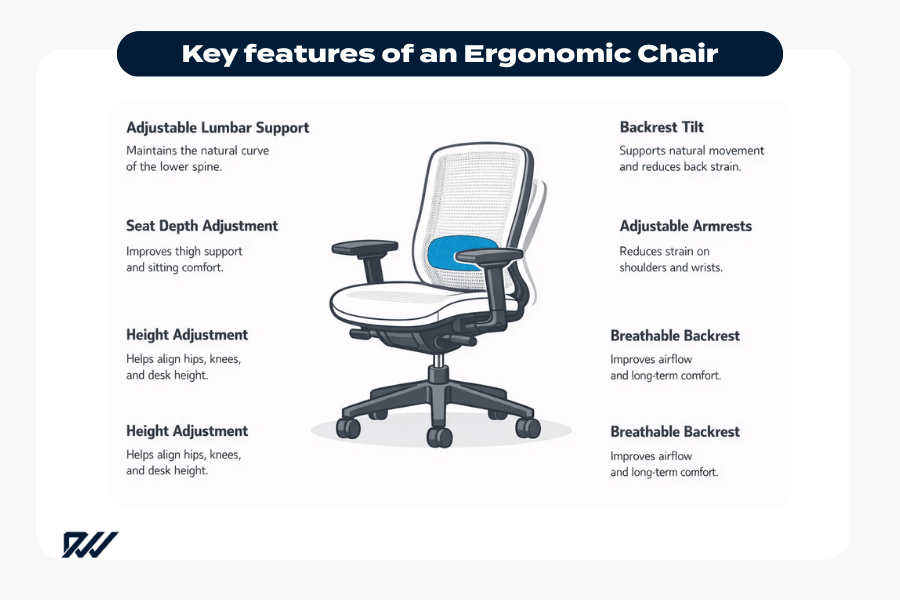
Overall, the best ergonomic chair is one that allows the user to customise several aspects of the seating position. This adaptability helps ensure that lumbar support functions effectively and remains comfortable during long periods of desk work.
Ergonomic Chairs Designed for Lumbar Support
Many modern ergonomic office chairs are specifically designed to support the natural curve of the spine. By integrating lumbar support into the backrest and allowing various adjustments, these chairs help users maintain better posture and reduce strain on the lower back during extended periods of sitting.
Within the Remtek Workplace ergonomic chair range, several models are designed with lumbar support features that suit contemporary office environments. Chairs such as the Ergochair Adapt 660 Series, Ergochair Adapt 630 Series, and RS74 Ergonomic Office Chair incorporate ergonomic design elements intended to promote healthier seating posture and improve comfort throughout the working day.
These chairs typically include features such as adjustable backrests, supportive backrest contours, and flexible seating adjustments. By allowing users to position lumbar support to match the natural curve of their lower back, ergonomic chairs help create a more supportive and sustainable seating experience.
Conclusion
Lumbar support is an essential element of ergonomic office seating. By maintaining the natural curve of the lower spine, it helps reduce strain on the back and encourages healthier sitting posture during long periods at a desk.
Choosing an ergonomic chair with effective lumbar support can significantly improve everyday comfort and contribute to better long-term wellbeing in the workplace. When combined with proper chair adjustments and good posture habits, lumbar support helps create a more comfortable and productive working environment.