What Is a Desk Converter?
A desk converter, sometimes called a sit-stand desk converter, is an adjustable workstation that sits on top of your existing desk and allows you to switch between sitting and standing positions. Rather than replacing your desk entirely, it provides a simple way to create a more flexible and ergonomic workspace.
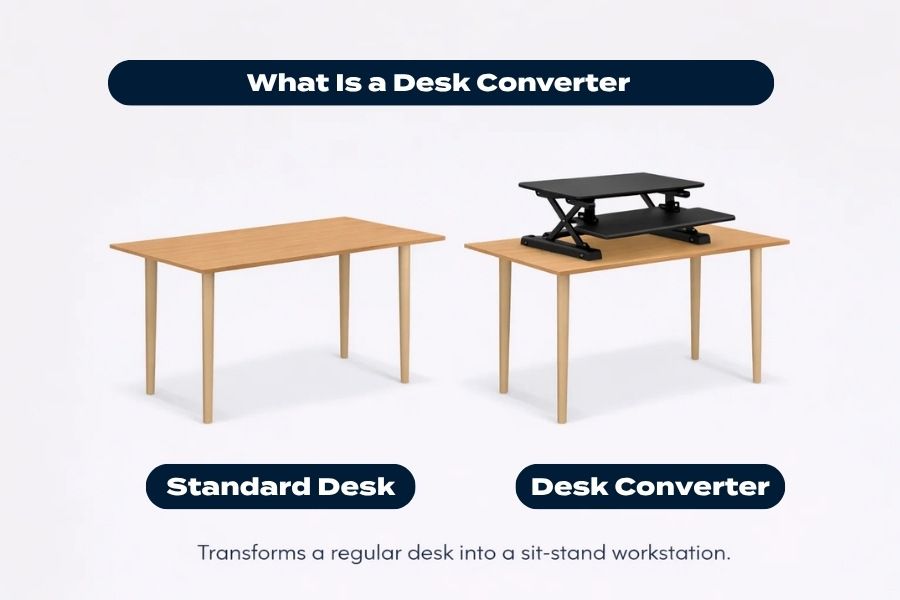
A desk converter sits on top of a standard desk, allowing it to function as a sit-stand workstation.
Desk converters typically include a platform for your monitor and a separate area for your keyboard and mouse. With a quick adjustment, you can raise the surface to a comfortable standing height or lower it back down for seated work.
They are widely used in both office and home environments, offering a practical solution for those who want the benefits of a standing desk without the cost or installation involved in replacing their current setup.
What Is a Standing Desk?
A standing desk is a fully adjustable desk designed to move up and down, allowing you to work comfortably while sitting or standing. Unlike a desk converter, a standing desk replaces your entire desk rather than sitting on top of it.
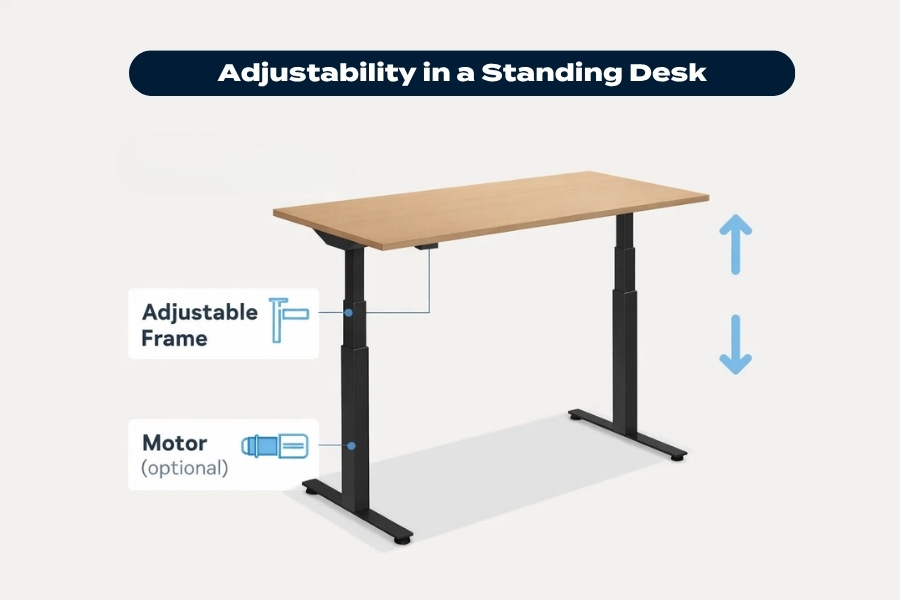
Most modern standing desks use either a manual crank or an electric motor to adjust the height. This allows for smooth transitions between positions and greater control over the overall workspace.
Standing desks often provide more space and a cleaner setup compared to converters, as all equipment remains on a single surface. They are commonly used in offices that prioritise ergonomic design and long-term comfort, particularly for employees who spend extended periods at their desks.
Desk Converter vs Standing Desk: Key Differences
While both desk converters and standing desks are designed to support sit-stand working, there are several important differences between the two.
The most noticeable difference is how they are used. A desk converter sits on top of an existing desk, while a standing desk replaces the desk entirely with a height-adjustable frame.
In terms of cost, desk converters are generally more affordable, making them a popular entry-level option. Standing desks, on the other hand, tend to be more expensive but offer a more integrated and permanent solution.
There are also differences in space and design. Desk converters can take up additional room on your desk surface and may feel slightly bulkier, whereas standing desks provide a cleaner, more streamlined workspace.
| Feature | Desk Converter | Standing Desk |
|---|---|---|
| How It Works | Sits on top of an existing desk | Replaces the entire desk |
| Setup | Quick, minimal setup | Requires full installation |
| Cost | More affordable, entry-level option | More expensive, long-term investment |
| Space & Design | Takes up desk surface, can feel bulkier | Cleaner, more streamlined workspace |
| Flexibility | Easy to move and reposition | Fixed, more permanent solution |
| User Experience | Simple and practical | More integrated and refined |
| Core Benefit | Adds sit-stand functionality to existing desk | Built-in sit-stand functionality |
In summary, both options offer similar benefits in terms of flexibility and movement, but they differ in setup, cost, and overall user experience.
How Each Option Works
Both desk converters and standing desks are designed to allow seamless transitions between sitting and standing, but they achieve this in slightly different ways.
A desk converter works by placing an adjustable platform on top of your existing desk. The platform moves vertically using either a manual lifting mechanism or an electric motor. As you raise or lower the unit, your monitor and keyboard move together, maintaining a consistent working position.
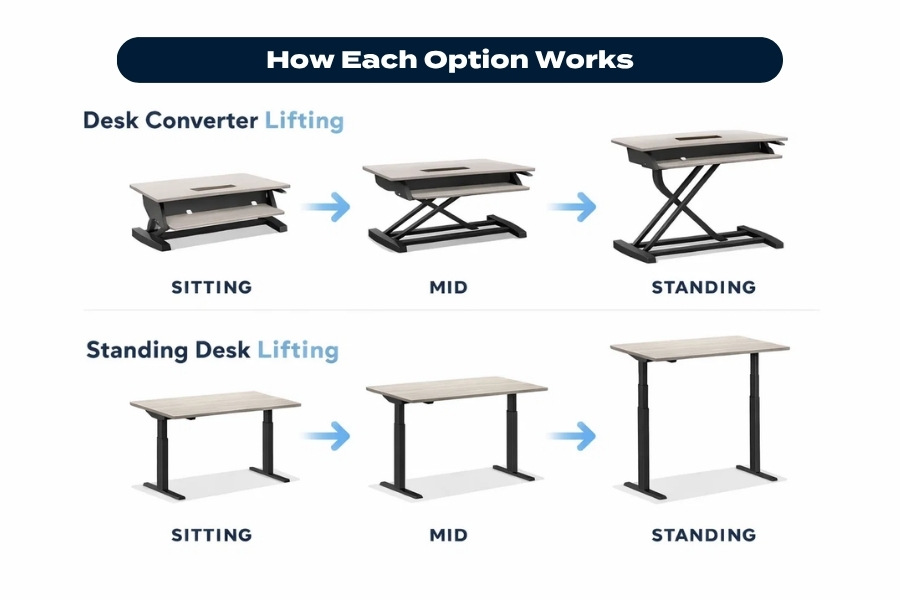
Both desk converters and standing desks allow you to switch between sitting and standing, but they adjust in different ways.
A standing desk, by contrast, adjusts the height of the entire desk surface. This means everything on the desk, including monitors, accessories, and peripherals, moves as one unit. Electric standing desks typically offer the smoothest adjustment, often with programmable height settings for added convenience.
While both options support sit-stand working, standing desks generally provide a more integrated experience, whereas desk converters offer a simpler, add-on solution.
Space and Setup Requirements Compared
Space is an important consideration when choosing between a desk converter and a standing desk, as each option affects your workspace differently.
Desk converters sit on top of your existing desk, which means they require enough surface area to fit securely. They can also reduce usable desk space, especially in smaller setups, and may require additional clearance when raised.
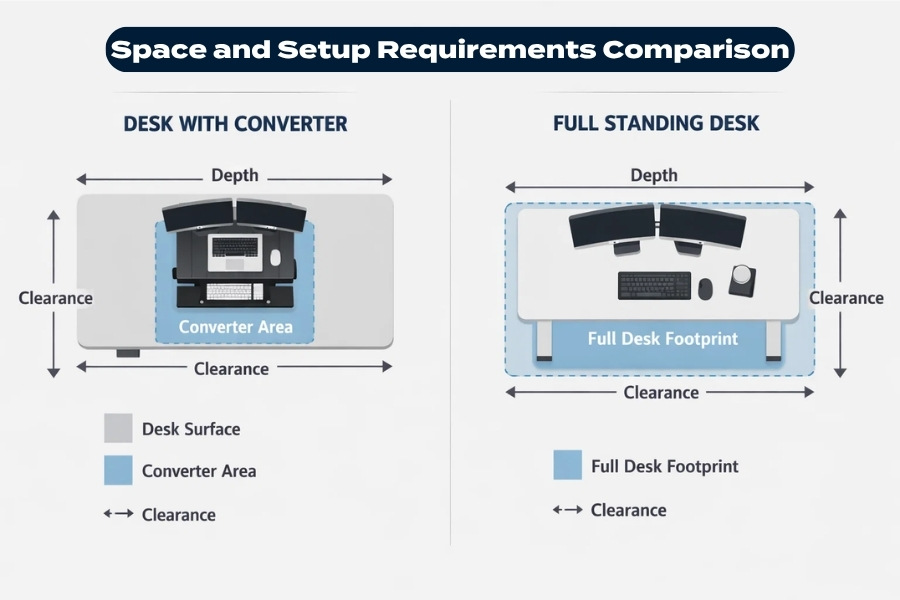
Standing desks, on the other hand, replace your current desk entirely. While they require more effort to set up initially, they often result in a cleaner and more spacious working surface once installed.
In terms of setup, desk converters are typically quicker and easier to use straight away, with little to no assembly required. Standing desks may take longer to assemble but offer a more permanent and streamlined solution.
Ultimately, desk converters are ideal for quick upgrades or limited spaces, while standing desks are better suited for dedicated workstations with room for a full replacement.
Cost Comparison: Desk Converter vs Standing Desk
Cost is often one of the deciding factors when choosing between a desk converter and a standing desk.
Desk converters are generally the more affordable option. They provide the core benefit of sit-stand flexibility without the need to invest in an entirely new desk. This makes them a popular choice for home offices, temporary setups, or those working within a budget.
Standing desks tend to be more expensive due to their full-desk design and advanced features, particularly in electric models. However, they can offer better long-term value for those seeking a permanent ergonomic solution.
It is also worth considering additional costs. For example, standing desks may require accessories such as cable management systems or anti-fatigue mats, while desk converters may not.
In summary, desk converters offer a cost-effective entry point, whereas standing desks represent a larger investment with a more comprehensive workspace upgrade.
Which Is Better for Small Spaces?
When working with limited space, desk converters are often the more practical choice. Because they sit on top of your existing desk, they allow you to upgrade your setup without needing additional floor space or replacing furniture.
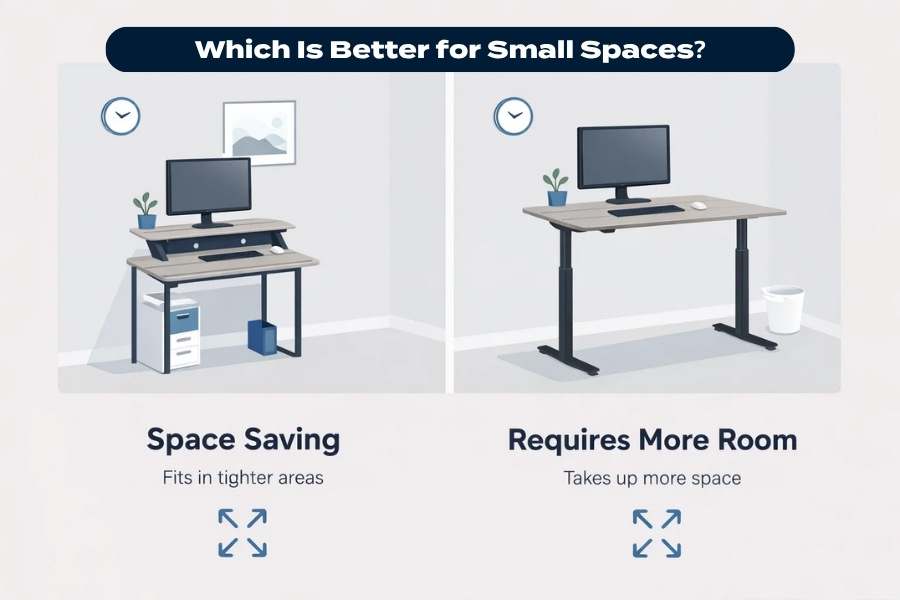
However, it is important to consider desk depth and available surface area. Some converters can feel bulky and may reduce usable workspace, particularly on smaller desks.
Standing desks, while offering a cleaner surface overall, require enough room to accommodate a full desk replacement. This can be less suitable for compact home offices or shared spaces.
In general, desk converters are better suited to smaller environments, while standing desks work best where space is less of a constraint.
Flexibility and Ease of Use
Both desk converters and standing desks are designed with flexibility in mind, but they differ in how easily they integrate into your daily routine.
Desk converters are quick to set up and simple to use. Most models require minimal effort to adjust, making them ideal for those who want an immediate solution without installation.
Standing desks, particularly electric models, offer a more refined experience. Features such as smooth motorised movement and programmable height settings can make transitions effortless and consistent.
In terms of adaptability, desk converters can be moved or repositioned easily, which is useful in shared or temporary workspaces. Standing desks, being more permanent, are less flexible but provide a more stable and seamless setup over time.
The choice ultimately depends on whether you prioritise convenience and portability or long-term usability and comfort.
Ergonomics and Posture Benefits
Both desk converters and standing desks support better ergonomics by allowing you to alternate between sitting and standing throughout the day.
Desk converters can help improve posture when set up correctly, particularly if the monitor and keyboard are positioned at appropriate heights. However, some models may offer less precise adjustment, which can affect comfort over longer periods.
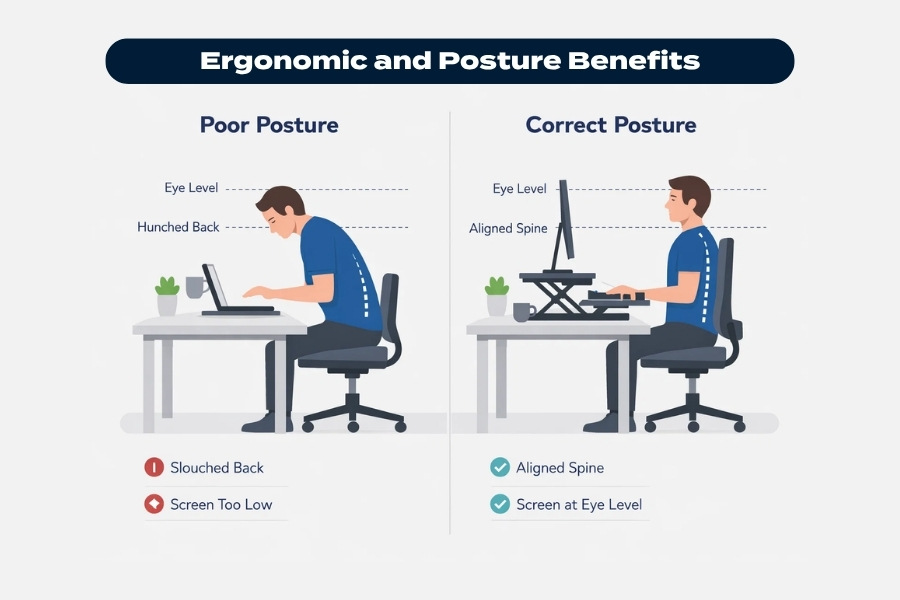
Standing desks typically provide greater ergonomic control. Because the entire desk surface moves, it is easier to maintain consistent alignment for your screen, keyboard, and accessories.
Regardless of the option you choose, proper setup is essential. This includes ensuring your screen is at eye level, your arms are comfortably positioned, and you alternate regularly between sitting and standing.
Both solutions can contribute to improved posture and reduced discomfort, but standing desks often offer a more tailored ergonomic experience.
Pros and Cons of Desk Converters
Desk converters offer a convenient and cost-effective way to introduce sit-stand working, but they come with both advantages and limitations.
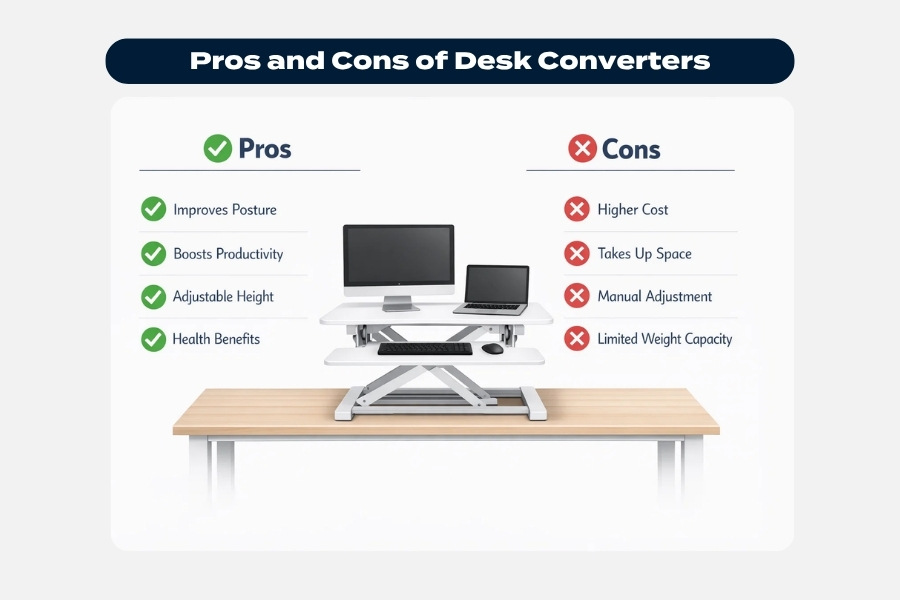
One of the main benefits is affordability. Compared to standing desks, converters provide a lower-cost entry point while still delivering the core functionality of height adjustment. They are also easy to set up and can be used immediately without replacing your existing desk.
In terms of flexibility, desk converters are portable and can be moved or repositioned as needed. This makes them ideal for home offices, shared workspaces, or temporary setups.
However, they can take up valuable desk space and may feel bulky, particularly on smaller desks. Some models also offer a more limited height range and may not provide the same level of stability or smooth adjustment as a full standing desk.
Overall, desk converters are a practical option for those seeking a simple and accessible solution, but they may not suit every workspace.
Pros and Cons of Standing Desks
Standing desks provide a more integrated and long-term solution for sit-stand working, with several key advantages over desk converters.
One of the biggest benefits is the clean and spacious working surface. Because the entire desk adjusts, there is no need for an additional platform, resulting in a more streamlined setup. Standing desks also tend to offer better stability and a wider height range, which can improve overall comfort.
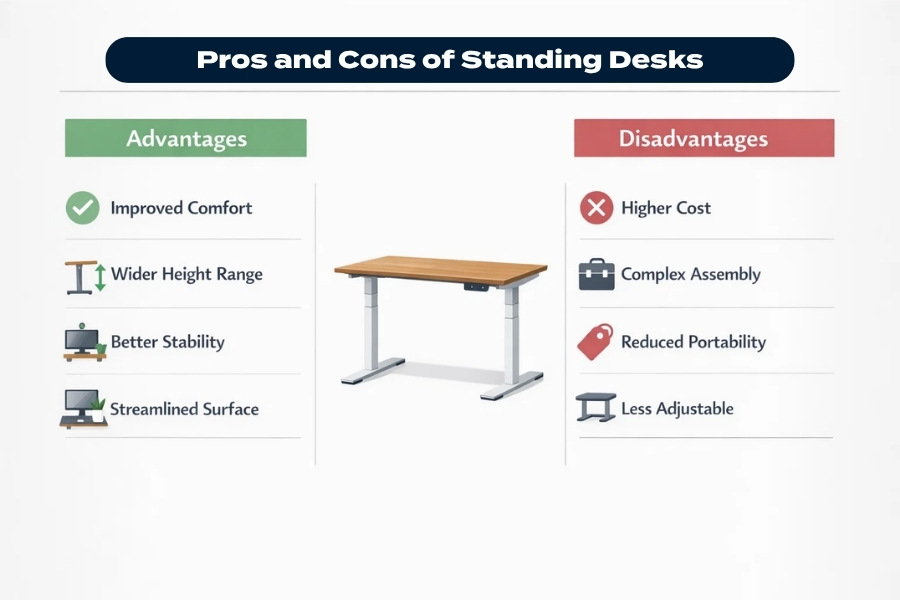
Electric standing desks, in particular, provide smooth and precise adjustments, often with programmable settings for added convenience.
On the downside, standing desks are generally more expensive and require more effort to assemble. They are also less portable, making them a more permanent fixture in your workspace.
Despite the higher investment, standing desks are often preferred by those looking for a long-term ergonomic solution with greater flexibility and performance.
Who Should Choose a Desk Converter?
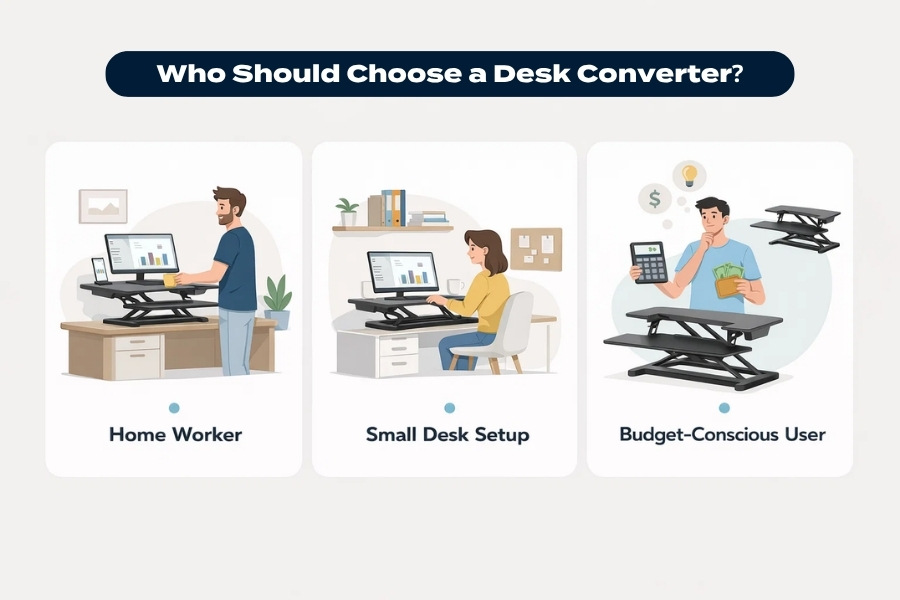
A desk converter is well suited to individuals who want a simple and affordable way to improve their workspace without making major changes.
They are ideal for people working from home, those with limited space, or anyone who needs a flexible and portable solution. If you are not ready to commit to a full standing desk, a converter provides an easy way to experience the benefits of sit-stand working.
Desk converters are also a good choice for shared environments, where a permanent desk replacement may not be practical.
In general, they are best suited to users who value convenience, affordability, and ease of setup.
Who Should Choose a Standing Desk?
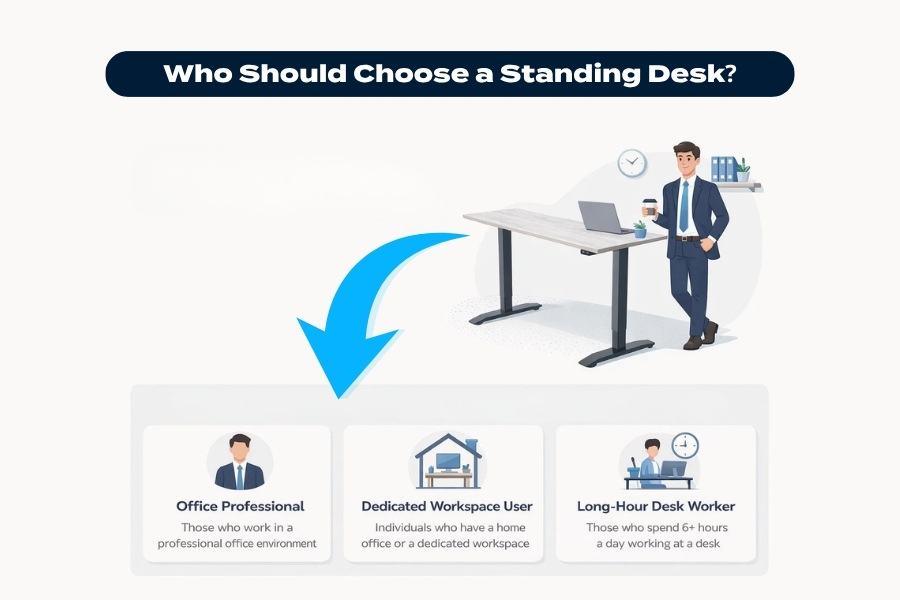
Standing desks are better suited to those who want a more permanent and fully integrated workspace solution.
They are particularly beneficial for individuals who spend long hours at their desk and require consistent ergonomic support. With greater adjustability and stability, standing desks can provide a more comfortable experience over extended periods.
They are also ideal for dedicated office setups where space and budget allow for a full desk replacement.
If you are looking for a long-term investment in your workspace with enhanced features and performance, a standing desk is often the better option.
Which Option Is Best for Your Work Setup?
Choosing between a desk converter and a standing desk ultimately depends on your specific needs, workspace, and budget.
If you are looking for a quick, affordable upgrade that works with your existing furniture, a desk converter is often the most practical solution. It allows you to introduce sit-stand working with minimal effort and without committing to a full desk replacement.
On the other hand, if you are building a dedicated workspace or planning for long-term use, a standing desk may be the better choice. It offers a cleaner setup, greater stability, and more precise adjustment, which can enhance comfort over time.
It is also worth considering how you work day to day. For more flexible or temporary setups, desk converters provide convenience and portability. For consistent, full-time use, standing desks tend to offer a more refined and ergonomic experience.
Final Thoughts: Desk Converter vs Standing Desk
Both desk converters and standing desks are designed to support healthier, more dynamic ways of working. Each offers the ability to alternate between sitting and standing, which can help reduce the strain associated with long periods at a desk.
Desk converters stand out for their affordability, ease of use, and flexibility, making them an excellent entry point for those new to sit-stand working. Standing desks, meanwhile, provide a more comprehensive and long-term solution, with improved stability and a cleaner overall design.
There is no single right choice for everyone. The decision comes down to your priorities, whether that is cost, space, convenience, or long-term performance.
Whichever option you choose, the most important factor is how you use it. Regular movement, proper setup, and consistent use will have the greatest impact on your comfort and productivity.
Frequently Asked Questions
- What is the main difference between a desk converter and a standing desk?
A desk converter sits on top of your existing desk and adjusts your working height, while a standing desk replaces your entire desk with a height-adjustable frame. - Which is more affordable: a desk converter or a standing desk?
Desk converters are generally more affordable, making them a popular choice for those on a budget or looking for a simple upgrade. - Do standing desks offer better ergonomics than desk converters?
Standing desks often provide better ergonomic control because the entire desk moves, allowing for more consistent positioning of your equipment. - Are desk converters suitable for small workspaces?
Yes, desk converters are usually better suited to smaller spaces, as they do not require replacing your existing desk. - Can both options support dual monitors?
Both desk converters and standing desks can support dual monitors, but you should always check the weight capacity and surface size. - Which option is easier to set up?
Desk converters are typically easier to set up, as they require little to no assembly. Standing desks usually require more time to install. - Is it better to sit or stand all day?
Neither is ideal. The best approach is to alternate between sitting and standing throughout the day to reduce strain and improve comfort. - Are electric standing desks worth the extra cost?
Electric standing desks offer smoother adjustments and added convenience, which can be worthwhile for frequent use. - Can a desk converter be moved easily?
Yes, most desk converters are portable and can be repositioned or removed as needed, making them ideal for flexible workspaces. - Which option is better for long-term use?
Standing desks are generally better for long-term use due to their stability, durability, and more integrated design, while desk converters are ideal for shorter-term or flexible setups.